
Hey trader,
There is a photograph on the seventh floor at DePaul University.
A professor points at one chart.
Students pass that image on both sides on the way to class.
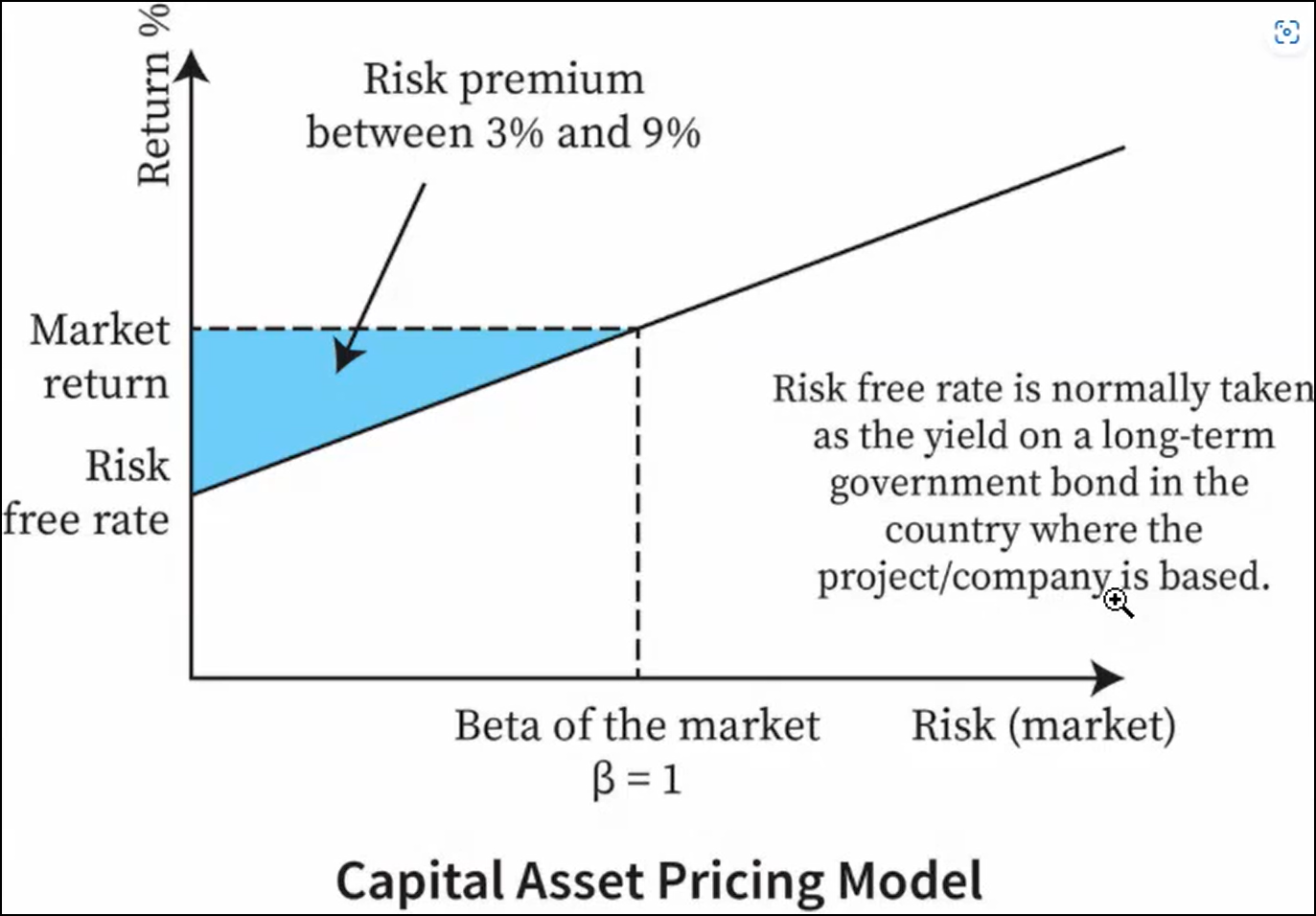
The chart – the CAPM model.
Every finance student on earth must know it to earn a degree.
I have taught it for ten years across two universities. It is the centerpiece of everything I do as a former hedge fund manager.
You see, charts only give you timing. They never show you what a company is truly worth.
The CAPM model tells me when a stock is a gift. It also warns me when a stock is a trap.
The gap between price and value has a name – arbitrage.
And when you understand how to read it, you learn to stop overpaying for things that blow up.
Now, there are a lot of misconceptions about the model. Many folks simply ignore it because it’s so simple to use.
But after today, you’ll understand not only how powerful it really is, but how you can use it starting tomorrow.
Here’s how it works.
The Model Behind Every Price
Did you know the CAPM won four professors a Nobel Prize? Sharpe and Mossin built the version the whole industry runs on.
The model gives you the expected return on any stock. It stands on three inputs you can pull tonight:
- The risk-free rate. A one-year treasury bill pays 3% to 4% with no price risk. That is your baseline for doing nothing.
- The risk premium. Take the S&P 500 return and subtract the risk-free rate. A 10% market against a 3% bill leaves a 7% premium.
- Beta. This measures how hard a stock swings with the market. A beta of 1.2 means the stock runs 20% riskier than the market.
Multiply the premium by beta. Add the risk-free rate back in, and your expected return appears.
Where The Money Actually Lives
The formula is the easy part. Any student can crunch the numbers.
The hard part comes when the model stops holding. That gap is the whole game.
Run CAPM on Apple. Say it projects a 20% return for the year.
Now track the real Apple through the year. Say it is only delivering 14%.
You have a 6% gap. The stock is overpriced.
You should short the hell out of it. The projection and the reality no longer agree.
Now flip the example. Say Apple tracks 23% against that same 20% projection.
That extra return is positive alpha. You buy more until the model catches up.
On the security market line, projection and reality sit together. No gap there means no edge and no profit.
Why Managers Chase Bubbles
Fund managers get graded on alpha every quarter. Positive three alpha means 300 basis points above the benchmark.
Negative alpha means the manager is falling behind. A manager can lose his job over it.
So he panics. He starts buying overbought names to manufacture a return.
That is why utilities go parabolic while the real value is not there.
Do This Before The Open
You do not need the full formula to start today. Pull up a simple three-month price change.
Apple is up 22% over three months. The market expects close to 22% earnings growth when it reports in two weeks.
Apple is up 18% year to date. That 18% is the growth already priced into the stock.
A miss on those numbers blows out everyone who overpaid.
I could walk away from charts tomorrow. This model does the ticket.
I still make mistakes. I just never make lethal ones, because I price things before I buy them.
My goal is to turn you into an arbitrageur.
Price it first. Trade it second.
Professor Jeffrey Bierman
Creator of the Genesis COG System