
Hey trader,
Stop losses are supposed to help you manage risk…right?
But what happens when price blows straight through the level you picked…yet, somehow you are still in the trade, watching the loss grow by the second?
A member ran into exactly that this morning.
His stop was sitting right where it should have been. It just never got him out, and a small loss started turning into one that actually hurts.
It turns out he made a common mistake I’ve seen countless times: mixing up the “type” of order.
You see, he assumed a “stop” was simply that. But it’s not.
A stop is a wait condition, not an actual order.
It’s the action it triggers that matters.
Once that clicks for you, you can build a stop that actually does its job when price reaches your line.
Let me walk you through what your stop is really doing, why that one detail matters so much, and how to set yours up so it never leaves you stuck.
What Your Stop Is Actually Doing
Do not think of your stop as anything more than a wait condition.
It is not some magic button that yanks you out of a trade. All it does is sit there and wait for price to reach your level. Then it acts.
What it does the moment it acts is the part nobody warns you about.
That comes down entirely to the type of stop you set.
A stop market keeps things simple. Price touches your level, and it closes you out at the very next price available.
A stop limit adds a catch. It waits for your level, then it demands that exact price or better before it will fill you.
That catch is where good traders get stung. It feels like the safer option. In a market that is moving fast, it can lock you inside the very trade you were trying to escape.
For some of you this might sound obvious. But it’s not as straightforward as you might think.
Think back to the last time you put in a stop market order that tripped in a fast downdraft.
Did you get filled near your stop? Probably not.
I’ve had plenty of trades where the markets move so fast that the trigger and the order are far enough apart to double, even triple my losses.
So, is it any wonder someone might try to get cute with a stop limit order?
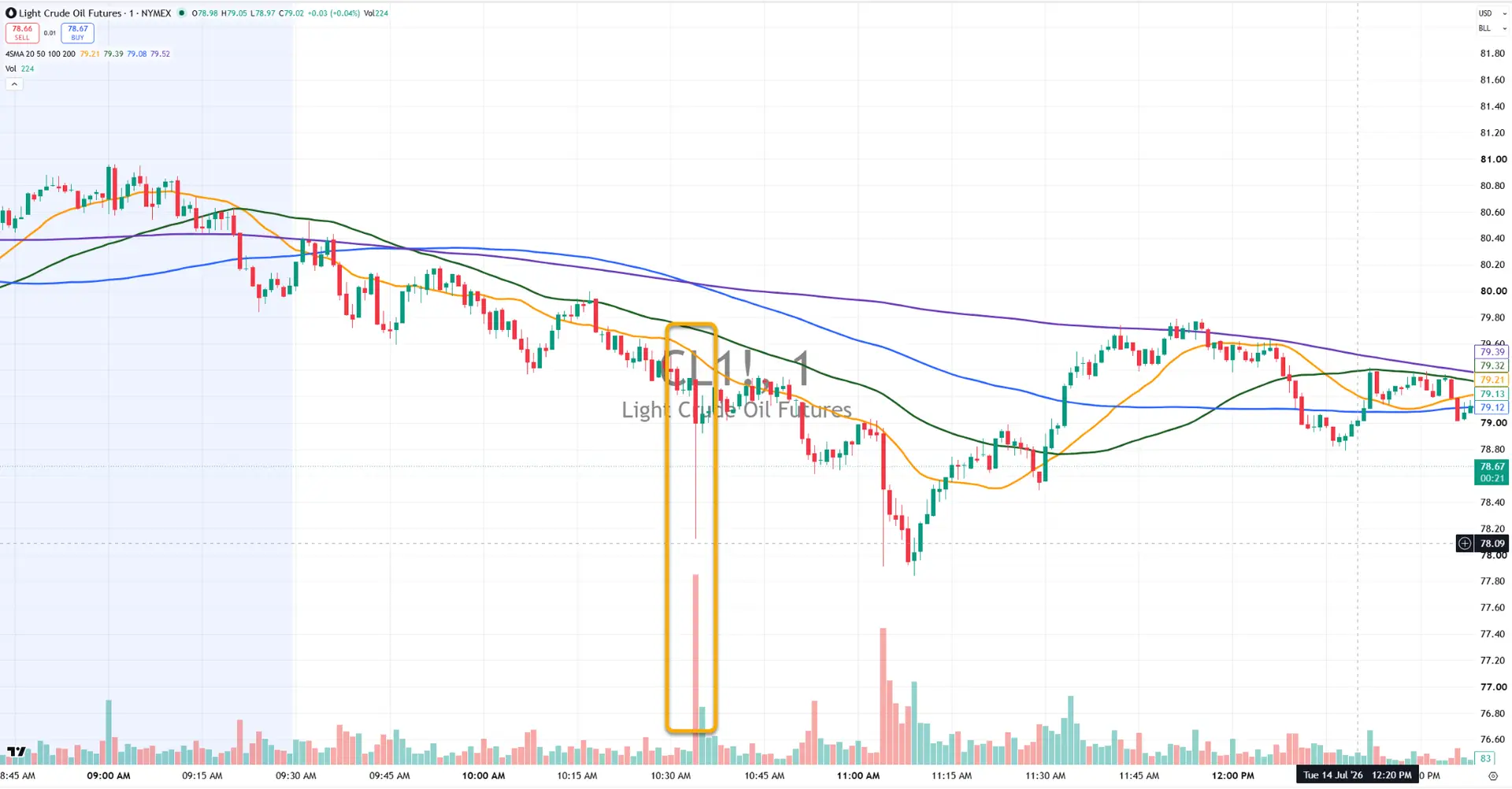
Crude showed exactly why this morning.
It dropped about two dollars in one shot, from around 80 down to 78, all on a single news drop.
A move that fast does not hang around waiting for your limit price. It is gone before you can react.
How to Set It Up So It Works
Obviously, the simple solution is to not use stop limit orders. But let’s take that a step further and use bracket orders.
Start by setting your order template to Triggers with Bracket.
From there, you are building three pieces around the trade.
- You limit your way in at the entry price you want, so you control your fill.
- You set a limit at your target to bank the win when price gets there.
- Then you set your protection as a stop market, never a stop limit, and you leave the whole thing good till canceled.
As an example:
- Say you go long with your target two points up and your risk set one point below.
- Your limit sits two points above as the target.
- Your stop market sits one point under your entry.
If price breaks that lower level, the stop fires and closes you at market. You are out.
One warning if you trade straight off the chart…
When you right click to buy with a bracket, that ticket will very often default to a stop limit on you.
Change it to a plain stop.
A plain stop is your stop market, and that is the one you want.
This becomes life or death when gap risk is live.
The US likes to make its moves during non market hours, and a lot of it lands inside that 4:00 to 5:30 Eastern window.
One headline can gap crude several dollars while you are away from the screen. A stop limit will sit there unfilled the whole time while the loss keeps stacking up.
There is one rare case worth knowing about.
If you truly had a stop market on, price traded clean through your level with real size behind it, and you still did not get filled, that one is on your platform.
Grab a screen capture. Call the trade desk and have them pull the order. A real stop market fills the instant your price is touched, the same as you hitting the flatten button yourself.
The Takeaway
Here is what changes for you on the very next trade.
Set the stop market and let it do its job. Don’t try to get cute.
Price hits your line, the trade closes at the next available price, and your risk stays right where you drew it. That is protection you can lean on when the tape turns against you.
I call every entry, stop, and target live inside The 10AM Bell, along with the reason behind each one. Every session, no exceptions.
Click here to join us and watch the next trade called in real time.
Blake Young
Senior Market Strategist, TheoTRADE