
Hey trader,
Crude stopped me out Wednesday morning for a $20 loss. I was already planning to buy it again.
That might sound reckless. I’d already checked my breakeven win rate before I ever entered.
Before the stop hit, I told the room what each attempt was worth. I was risking 20 cents to make about 70 cents.
At those numbers, I only need to be right 2 out of every 9 times to come out ahead. That works out to about 22%.
Every trade you take carries a breakeven win rate of its own. It’s the share of trades you need to win just to cover the ones you lose.
If you don’t know yours, every stop feels like proof the setup failed. You end up quitting good setups after one loss or feeding bad ones for too long.
Once you know it, a small loss stops feeling like a verdict. You already budgeted for it before you clicked buy.
That same morning, I took a 2-point loss on an S&P 500 futures short in the 10% Club. I told the room not to sweat it, because that setup only has to work about 1 out of 8 times.
Let me show you how I work out my breakeven win rate before I enter, and how it decides whether I take the trade again.
What Your Breakeven Win Rate Tells You
Your breakeven win rate is the share of trades you have to win to cover your losers. Win more often than that, and you make money over time.
I work it out from two numbers I already have before every trade. One is what I’m risking, and the other is what I’m targeting.
Add the two together, then divide the risk by that total.
On Wednesday’s crude trade, I gave the room a 7 to 2 reward-to-risk ratio. Seven plus two is nine, so I needed to be right 2 out of every 9 times.
That’s about 22%. I could lose that setup 7 times out of 9 and still break even.
The smaller your risk against your target, the lower your breakeven win rate.
Two Small Losses From Wednesday
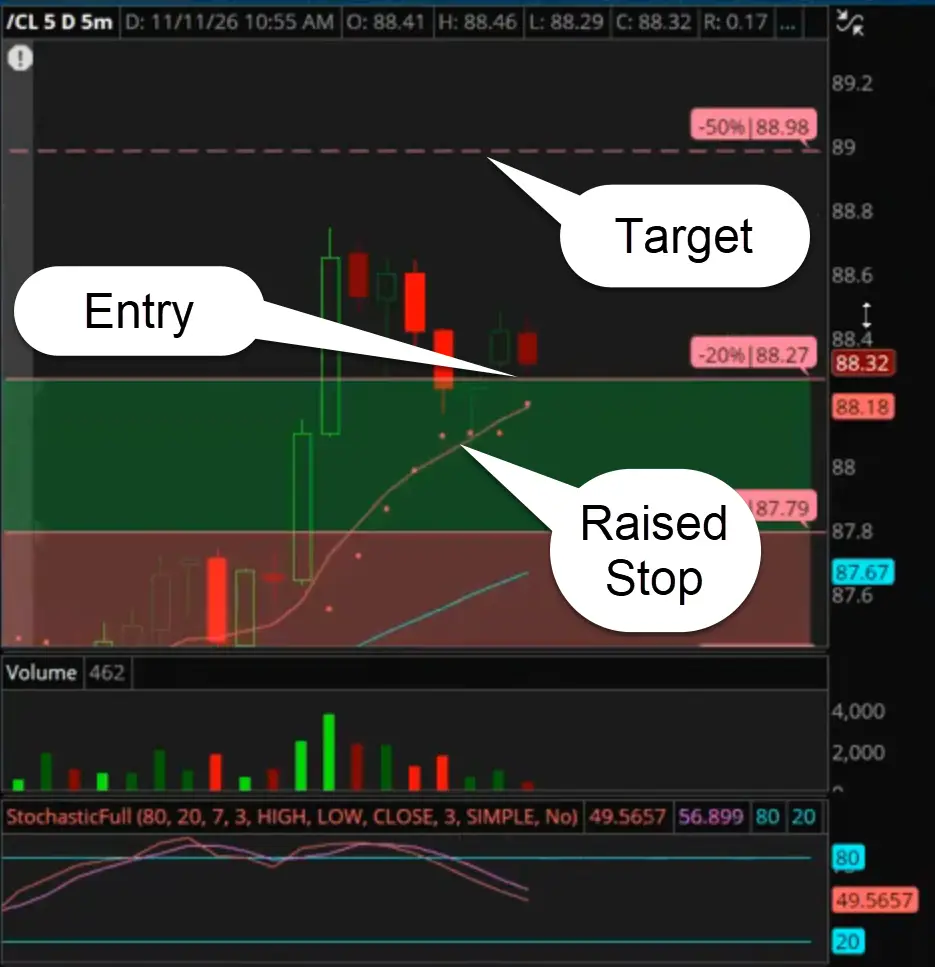
Crude broke out Wednesday morning on heavy volume. Two breakout candles traded about 6,200 contracts between them.
I bought micro crude at 88.20 with my stop at 88. My first target was 88.98.
I told the room up front that 88 might not hold. If it stopped me, I’d get back in on a new breakout at 88.27.
That plan came with a breakeven win rate of about 22%. Losing 20 cents to go after a 70-cent move only needs to work that often.
Crude pulled back, and I raised my stop to 88.10. Price came back through it, and I was out for a $20 loss.
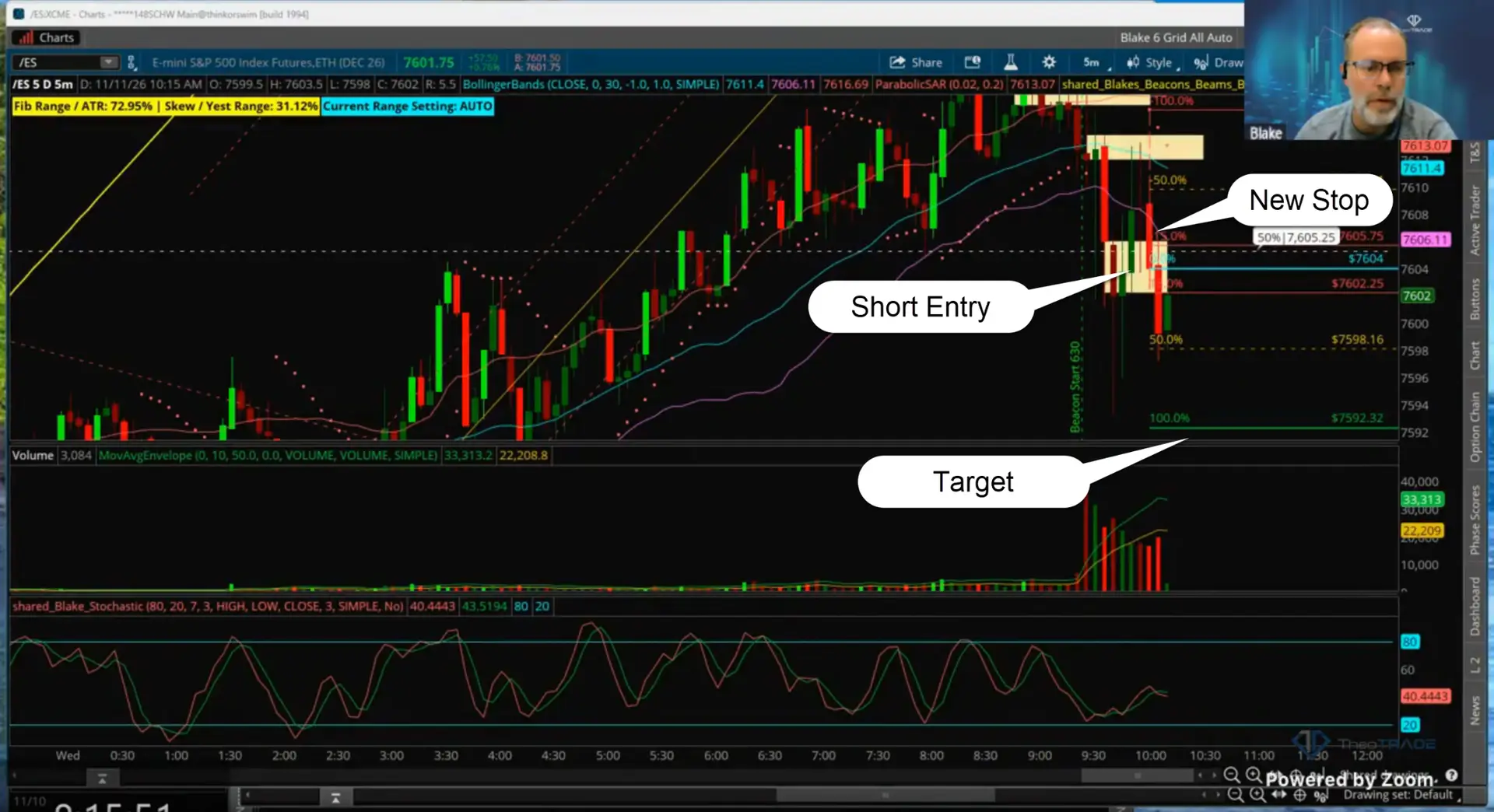
The S&P 500 futures gave me the same kind of loss in the 10% Club. I called a short on the micro contract at 7604 off a Bollinger Band breakout.
A Bollinger Band breakout is a close outside the bands, and it often signals momentum. My stop sat at 7610.25, and my target sat at 7592.50.
That’s 6.25 points of risk against 11.5 points of reward, a breakeven win rate of about 35%.
My rule on that trade is simple. Once price goes past 50% of the way to target, I move my stop down.
Price got past halfway, so I moved my stop to 7606. That cut my risk to just 2 points.
Price reversed and took me out for that 2-point loss. I told the room that risking 2 points against targets of 10 to 14 points only has to work about 1 out of 8 times.
My 11.5-point target sat right in that range. A 2-point loss fit easily inside the budget.
When A Small Stop Earns A Second Try
A low breakeven win rate makes a second attempt affordable. I still need a fresh signal before I take it.
Losing $20 on crude didn’t raise the bar for my next attempt. Each new trade only has to clear its own breakeven win rate.
I told the room I’d only lost $20 and was willing to reset the trade a second time. My re-entry needed a candle to close above 88.27, with a new stop at 87.80 just below the low shadow.
Crude never gave me that close. I never got a buy signal on the re-entry before the session ended, so there’s no second result to report.
My S&P 500 futures short played out the same way. Re-entering at my old price was tempting, and the chart never reset into a new setup, so I stayed out.
A small stop pays for a second try, and a fresh signal decides whether I take it.
That’s my line, and it doesn’t have to be yours.
Run The Breakeven Win Rate Check
You can run this breakeven win rate check on any setup before your next entry:
- Write down your risk and your target. Use the distance to your stop and the distance to your target, in points or dollars.
- Divide the risk by the total of both. For example, 20 cents of risk plus 70 cents of reward totals 90 cents. Divide 20 by 90, and you get about 22%.
- Name your re-entry signal now. Pick the exact close or level that would put you back in before the first stop ever hits.
If your breakeven win rate runs higher than your setup usually wins, the trade doesn’t fit. Tighten the stop to a real level, find a bigger target, or pass.
If the percentage is comfortably low, give the setup room to lose a few times. You already paid for those losses on paper before you entered.
On Wednesday, members heard both sets of numbers before I took either trade. They also heard my crude re-entry plan before the first stop ever hit.
Inside the 10% Club, every trade I call comes with an entry, a stop and a target. You hear the risk math out loud while the market’s still open.
When a stop hits, you hear exactly what I need to see before I go again.
Know your breakeven win rate, then let the small losses do their job.
Blake Young
Senior Market Strategist, TheoTRADE