What’s up, NASDAQians!
Let’s talk about something that’s just as important as finding a good trade: knowing when NOT to trade.
We’ve been dealing with some pretty extreme market conditions lately. When you’re looking at an ATR around 50, 70, or even higher, the market can move so aggressively that the strategies you normally rely on simply aren’t going to perform the same way.
And that’s exactly what I want you to understand.
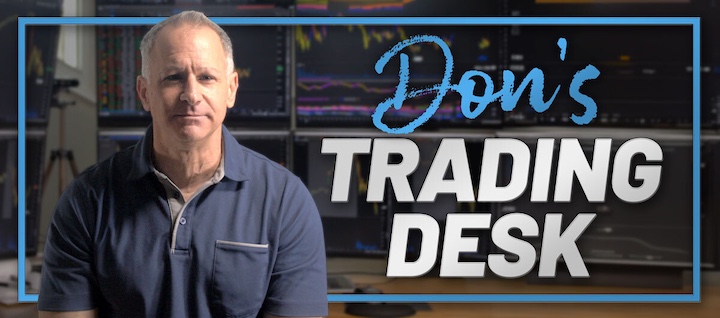
Watch this clip from today’s session, where I explain why the Golden Setup isn’t suited for every market environment, how to recognize when volatility is working against your strategy, and why sometimes the best trade is the one you don’t take.
1. Not Every Strategy Works in Every Market
One of the biggest mistakes traders make is trying to force their favorite strategy into market conditions where it wasn’t designed to work.
Take the Golden Setup, for example. I built this strategy to help traders learn futures and identify opportunities in more manageable market conditions. It works exceptionally well when the ATR is around 20 and under.
But when we’re pinned at an ATR of 50 or higher, the consistency just isn’t there.
You might get one good trade followed by one bad trade, then another good trade followed by another bad trade. That’s not a sustainable edge. That’s stress.
The key is understanding what kind of market you’re dealing with and recognizing when your strategy is no longer the right tool for the job.
2. Think of Your Strategies as Tools in a Toolbox
A lot of you have learned multiple strategies, and that’s a good thing.
Think of them as a quiver of arrows. You have different tools available, but each one has its own purpose and market conditions where it works best.
The Golden Setup is one of those tools. There are other approaches that can be more appropriate for markets with much larger ranges and faster movements.
The goal isn’t to completely change your trading style every time the market gets difficult. It’s to understand what you have available and use those tools accordingly.
You don’t need to use every strategy in every market.
3. Remember That Waiting Is Part of Trading
There’s an old saying that trading is 80% waiting and 20% execution. It might even be 90/10.
I know it’s frustrating to sit in front of your screens and feel like there’s nothing worth trading. I get it. Nobody wants to show up every day and hear that the market isn’t offering much.
But this is part of the process.
Being a good trader doesn’t mean constantly looking for something to trade. It means having the patience to wait for conditions that give you an actual edge.
If you’re experimenting with different approaches for these more volatile markets, test them in your simulator first. Work through the entries, understand the risk, and get comfortable with the process before putting real capital on the line.
The Bottom Line
You don’t have to trade every market, and you certainly don’t have to force a strategy into conditions where it doesn’t belong.
Know your product. Know your strategy. Understand the environment you’re trading in.
Sometimes, protecting your capital and waiting for a better opportunity is the best decision you can make.
Trade smart,
Tony Rago