Hey trader,
On Monday, the S&P 500 futures and the Russell both pushed to new highs.
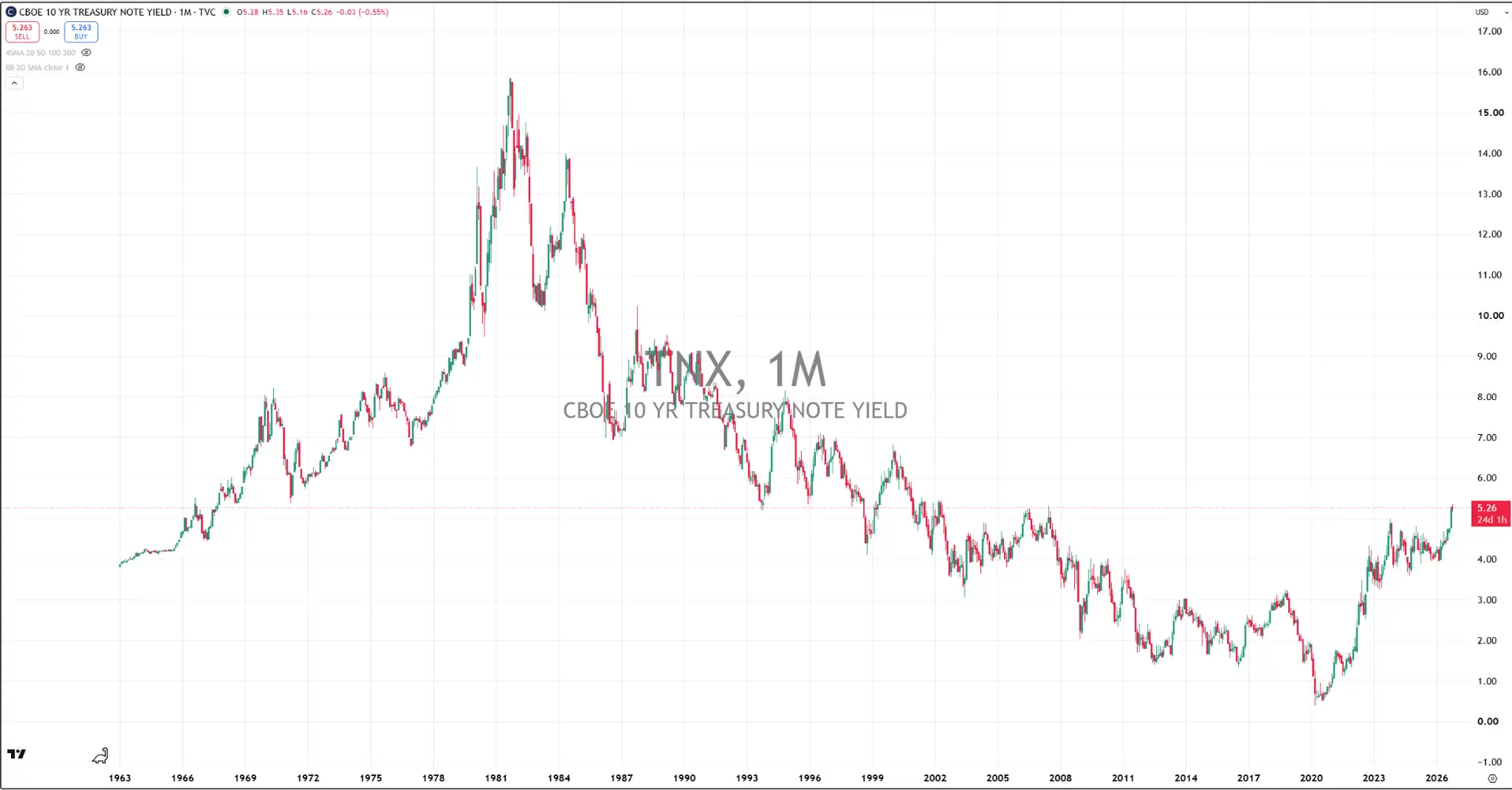
The 10-year Treasury yield hit 5.35% that same day. That’s the highest borrowing cost since 2007.
Rates that high should scare anyone running on borrowed money. And yet, we rallied.
I decided to take a small short into the strength. Fading a rally only pays when sellers finally show up.
I don’t take their arrival on faith. Before I trust a fade, I check where the money is going.
I watch the U.S. dollar for that answer.
When investors dump stocks and move to cash, the dollar tends to gain.
I follow it through Euro futures, which move opposite the dollar like a seesaw.
Into Monday’s close, the dollar wouldn’t gain. That one glance told me my short was a low-probability trade.
Skip the check and you risk sizing up a fade with no sellers behind it.
Run it and you know how hard to lean on the trade before you’re in.
Let me show you how the check works, using Monday’s trade from entry to exit.
Why Fading A Rally Needs Sellers
Fading a rally means shorting into strength and betting buyers are about to quit. Price only falls when someone actually sells.
Fading a rally with no sellers behind it puts you in front of buyers who aren’t finished.
When big money leaves stocks, it has to land somewhere. A lot of it lands in cash.
That shift shows up in the U.S. dollar. Selling stocks to hold cash pushes demand for the dollar higher.
My line is simple. Before fading a rally, I need to see the dollar strengthen.
Euro futures give me the cleanest read. The Euro trades against the dollar, so the two move like a seesaw:
- A falling Euro means the dollar is gaining. That backs fading a rally, since money may be heading to cash.
- A rising Euro means the dollar is losing ground, and nobody is running for the exits.
If the dollar won’t gain, the sellers haven’t shown up.
Monday’s Short Into The Highs
Monday tempted me into fading a rally. The 10-year yield hit 5.35%, the highest since 2007.
Rates sat above where they were in 2008, when housing rolled over. Rates like that should frighten anyone trading on leverage.
The S&P 500 futures, the Russell and the Nasdaq still pushed to new highs. I asked the room who the buyers were at those borrowing costs.
Price kept climbing with a bearish divergence on my chart. That means momentum faded while price made a higher high.
I shorted two micro S&P 500 futures at 43 with a stop at 48.
That’s 5 points of risk. A micro pays $5 a point, so two contracts put $50 on the line.
On a full-size contract, that same stop costs $250. I told the room up front this wasn’t a high-probability trade.
I added two more micros a few minutes later. That put me short four contracts at an average of 44.12.
What The Dollar Told Me
The short needed the dollar to gain into the close. That would show money moving out of stocks and into cash.
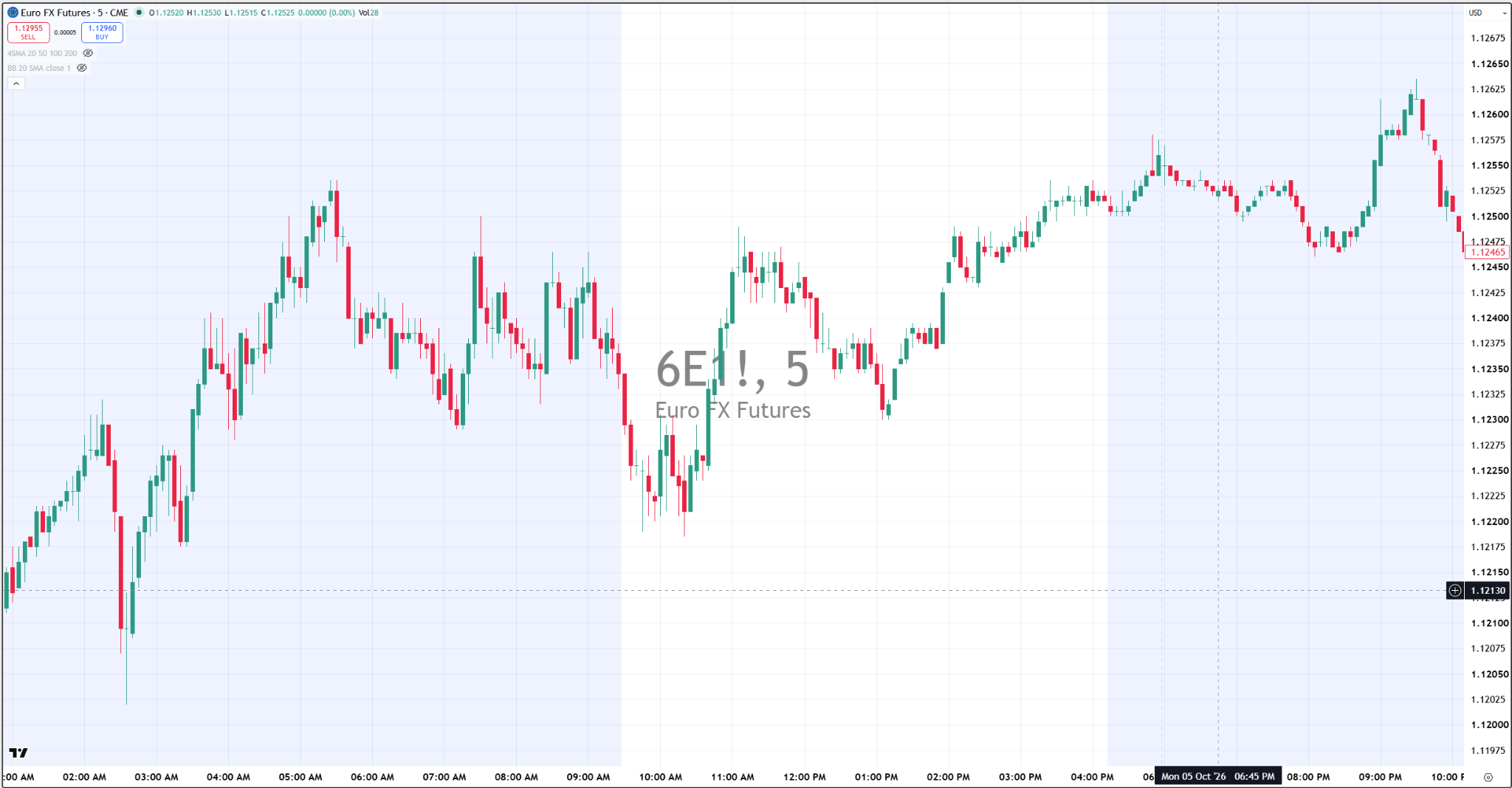
It didn’t happen. The Euro gained against the dollar, and so did gold.
I’d been short the Euro too, betting on that dollar strength. When it never came, I closed the Euro trade.
I told the room that made the ES short extremely suspect. I kept it, with four micros and a tight leash.
Then price gave me a warning candle followed by lower highs and lower lows. I pulled my stop to 43 and took my risk off.
As price slid, I trailed the stop to 42 to lock in a couple more points. A spike tagged 42 to the penny and took me out.
That’s 2 points on four micros. At $5 a point, the trade paid $40.
The selloff came after I was out. The market erased two hours of gains in about 20 minutes.
Even then, the dollar didn’t move. I read that drop as rotation, since no money showed up in the dollar.
That flat dollar kept my size small for the whole time I was fading a rally.
Running The Dollar Check Before Fading A Rally
You can add this to your next trade in three steps:
- Check Euro futures before fading a rally. A falling Euro backs the trade, and a rising Euro argues against it.
- Size the fade to what the dollar shows. Without dollar strength, I stay in micros with a stop I can afford.
- Pull risk at the first follow-through. A low-probability trade gets a short leash.
The check works for longs too. If the dollar starts climbing hard, that’s your clue money may be heading for cash.
That’s my line, and it doesn’t have to be yours.
Pull up Euro futures next to the market you trade. Watch how the two move the next time you’re thinking about fading a rally.
On Monday, I walked the room through yields, the dollar, gold and the VIX while fading a rally live.
Inside the 10% Club, you hear every stop move as I make it. You also hear which trades I trust and which ones I keep small.
Check the dollar first, then decide how hard to lean on fading a rally.
Blake Young
Senior Market Strategist, TheoTRADE