
Hey trader,
The fastest way to wreck a small account has nothing to do with picking the wrong direction.
It comes from trading the right idea in the wrong size.
You can be dead right on the chart and still give back a month of gains on a single oversized loss.
Wednesday’s tape was as flat as it gets. That made it the perfect classroom for the one habit that keeps an account alive when nothing is moving.
Here is the exact math I used to size every trade off my stop.
I will also give you the simple framework you can run on your own account before your next click.
Being Right Is Only Half the Job
Plenty of traders pick their contract count by feel.
A green streak makes them add. A red day makes them either freeze or double up to win it back.
The position size ends up reflecting mood instead of math. That is how one ordinary loss turns into a damaging one.
Your size should be decided before emotion ever enters the picture. The stop is what makes that possible.
Let the Stop Decide the Size
The method starts with two numbers you set before the bell.
The first is your account balance. Know it to the dollar at the start of the day.
The second is the slice of that balance you are willing to risk on any single trade. I keep mine between one and two percent.
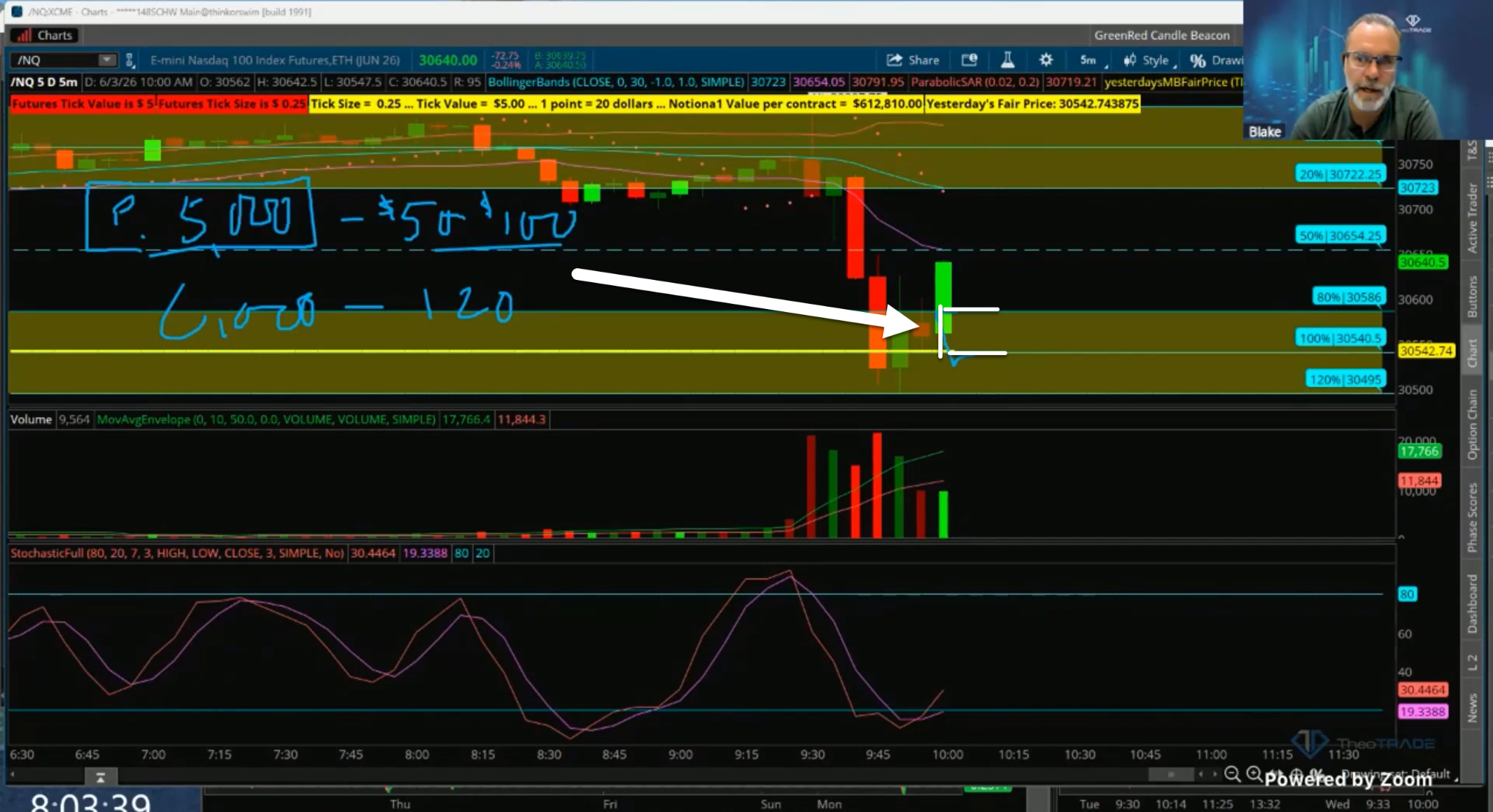
On a $5,000 account, that means every trade risks somewhere between $50 and $100. That band never moves based on how I feel about the setup.
Once those two numbers are locked, the stop does the rest of the work.
You measure the distance from your entry to your stop in dollars. Then you divide your risk budget by that number to get your contract count.
Watch the Math Work on Gold
Wednesday gave a clean example on gold.
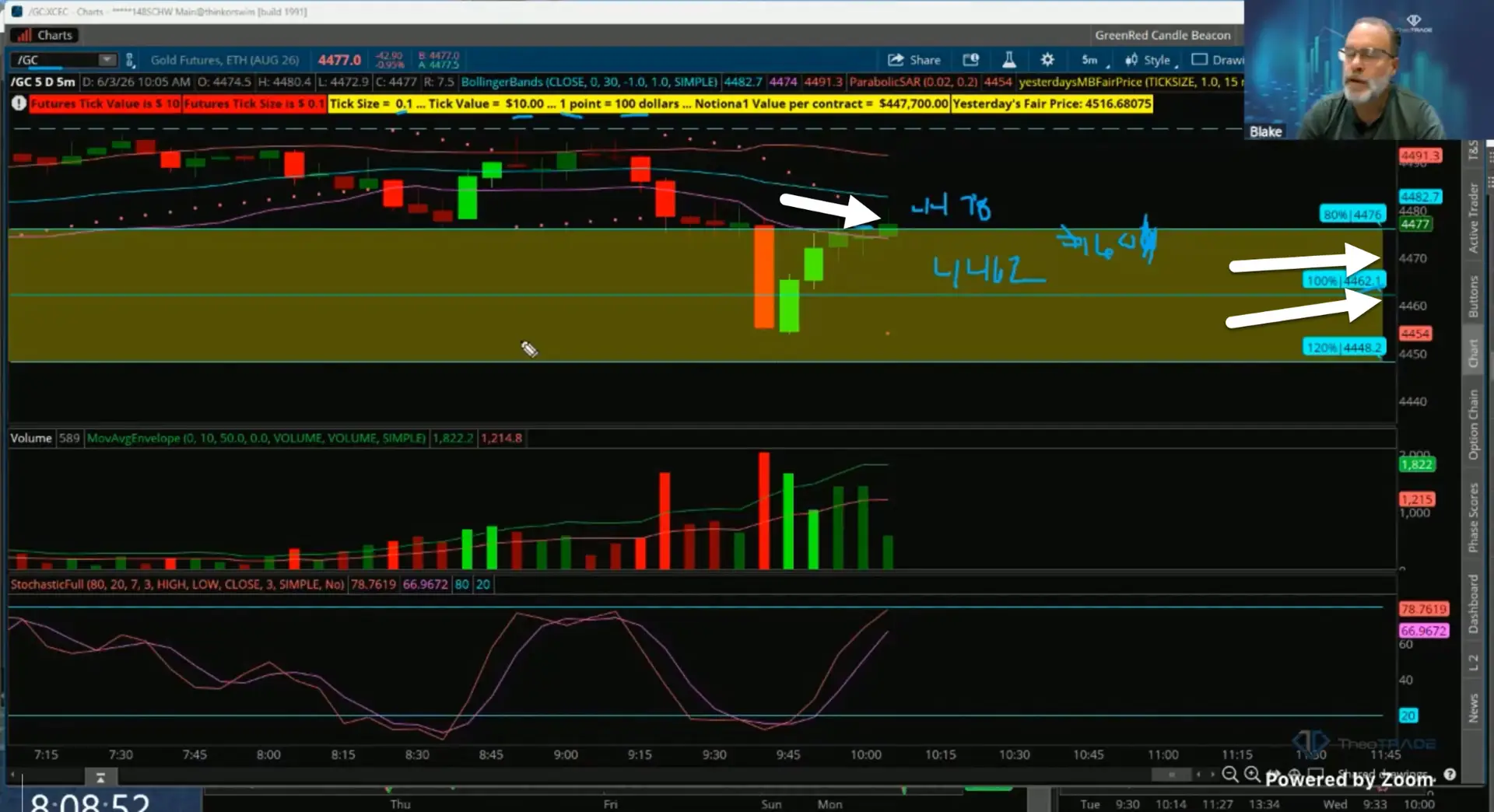
A beacon buy signal was setting up near 4478. My first instinct put the stop down at 4462, which is 16 points away.
Here is where the instrument matters. On gold, each full point is worth $100 on a full contract. Every ten cents is worth $10.
So that 16-point stop carried $1,600 of risk on a full e-mini. Even on a single micro, it was $160 of risk.
On a $5,000 account with a $100 ceiling, $160 is already too much. One micro was too big before I ever clicked.
The answer was to tighten the stop to a real level.
I moved it up to 4469 and leaned on three candles of higher highs and higher lows for structure. That brought the risk down to 10 points.
Ten points on one micro is $100 of risk. That number fit the account. The trade became exactly one micro, with a target up at 4497.
That put me in position to risk roughly $90 to make about $190 on a single contract.
The size was never a guess. It fell straight out of the stop.
I got filled on a reset of that breakout before I left for the futures room. The session ended before the trade reached the target, so I will not claim a result it never confirmed.
When the Only Size That Fits Is Zero
The same math protects you by telling you to pass.
Later that morning the Nasdaq printed a real buy signal. The entry sat near 3600 with a stop down at the zero around 3540.
That is a 60-point stop, which works out to $120 of risk on a single micro. On a $5,000 account with a $100 ceiling, even one micro breaks the rule.
So the correct position size was zero. The signal was valid. The math still told me to stand aside.
Let the Size Grow With the Account
Position size is not a fixed habit. It flexes with your balance.
I always reset and teach off a $5,000 account to keep it accessible. Your real number should track your actual equity.
Take that same 60-point Nasdaq stop. If you had built the account up to $6,000 and could risk $120, that trade now fits at two micros.
On a $5,000 account, the euro usually works out to one e-mini because of how it is priced. Everything else generally lands between one and three micros once the risk math is done.
Why This Keeps You in the Game
A dead tape is where this discipline earns its keep.
When nothing is moving, the urge is to force size to make the morning feel productive. That urge is exactly what the math shuts down.
Small, consistent risk is what lets you survive the losing streaks that every system hands you. It is also what makes one good winner actually matter.
I want big wins and small losses. Sizing off the stop is how I get both, every single trade, with no exceptions.
Flat sessions like Wednesday are the ones that build the habits you lean on when the tape finally moves.
Every trade I call inside the 10% Club gets sized this way before any order goes in. That covers the account balance, the risk band, the stop distance, and the contract count that the math produces.
Come see exactly how I size and call trades live every morning inside The 10AM Bell.
👉 Click here to watch the replay and join us.
Blake Young
Senior Market Strategist, TheoTRADE