
Hey trader,
IBM stock is dead money.
The company warned about delays, something I flagged in my soapbox sermon yesterday.
Yesterday proved me right in real time.
The charts gave no warning at all. A single word in the company’s outlook caused the pain.
You see, valuation risk hides where you least expect it.
A stock can be upgraded one day and hammered the next.
Fortunately, I’m here to teach you how to avoid this buzzasaw.
The term “multiple compression” gets thrown around a lot. The average trader understands what it is but not why it happens.
That all changes today.
What Multiple Compression Actually Is
A multiple is the price you pay for every dollar a company earns. A stock at 25 times earnings means you hand over 25 dollars for each dollar of profit.
Compression happens when that number shrinks. The earnings can hold steady while the multiple falls.
The price drops because buyers refuse to pay as much per dollar of earnings. Sentiment moves first, then the stock follows it down.
This is why a name can look cheap and keep getting cheaper. The earnings did not break. The willingness to pay for them broke.
Why It Matters More Than Any Chart
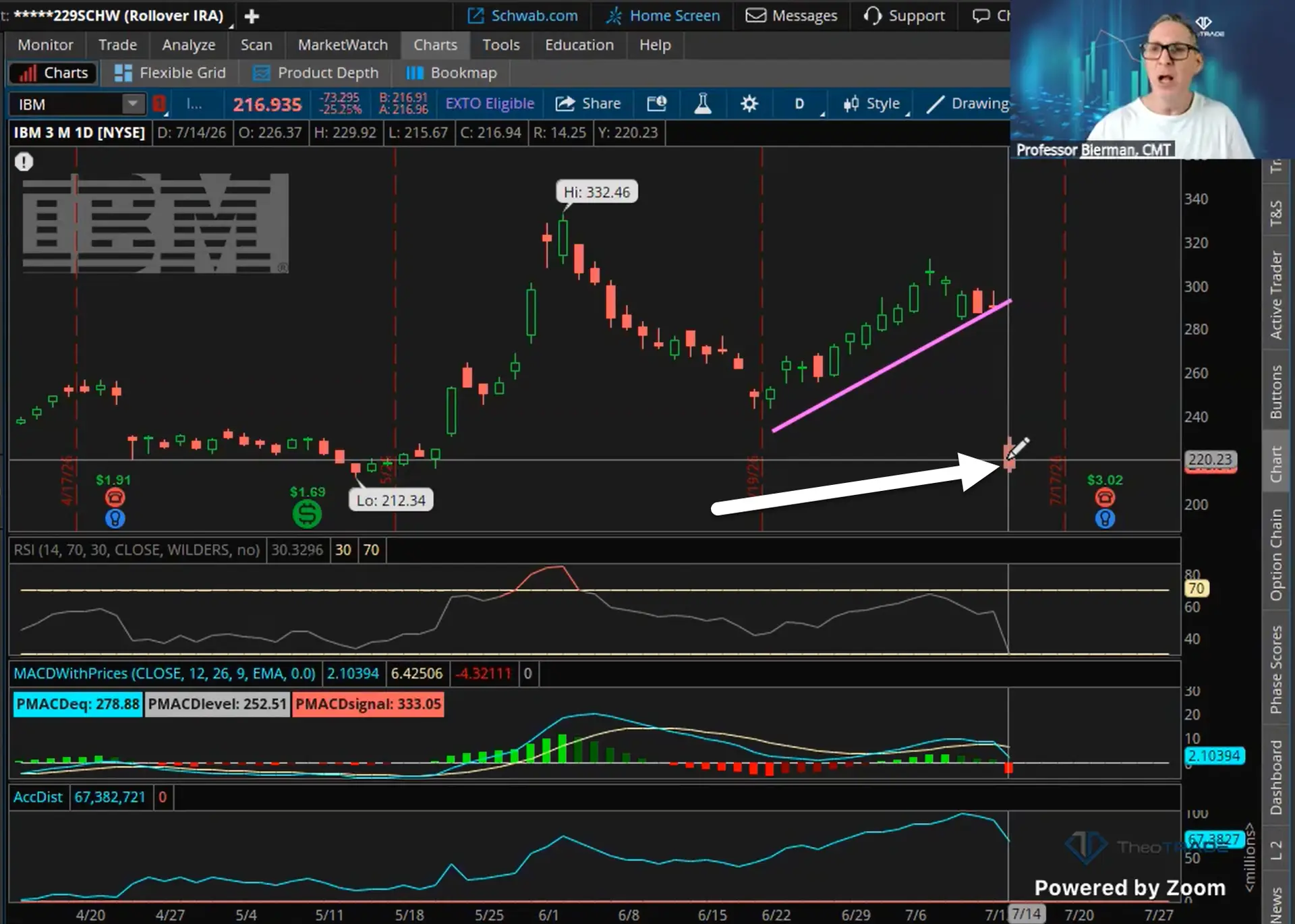
Charts do not predict. IBM is my proof.
Trade off the chart alone here and you get blindsided. The valuation moved first, and the chart never flinched.
Valuation is the hidden risk that sits underneath a calm price. It gives you the guardrails a chart cannot draw.
If the valuation and the risk are off, your chart means nothing. That is the part the average trader misses.
How It Works
The market treats a delay as broken trust. It punishes the multiple long before it asks any questions.
The same machines that once walked IBM higher are the ones unwinding it now. That reversal came without a single chart warning.
Once the trust cracks, the multiple contracts. One hiccup like this is all it takes to expose you.
The compression rarely stops at the first leg down. It tends to run much further than traders expect.
How It Applied to IBM
IBM did not stumble on the headline number. IBM warned that its work would run late.
I have a firm rule about that word. Any company tied to AI or quantum computing that says delay gets destroyed.
The multiple tells the true story here. IBM traded near 25 times earnings, and today it sits closer to 19.
That compression still has room to run. Tech stocks that bottom tend to fall toward 12 to 15 times earnings.
I have seen it go much further. I watched the market take Lululemon from a 70 multiple down to nine.
How to Use It to Protect Yourself
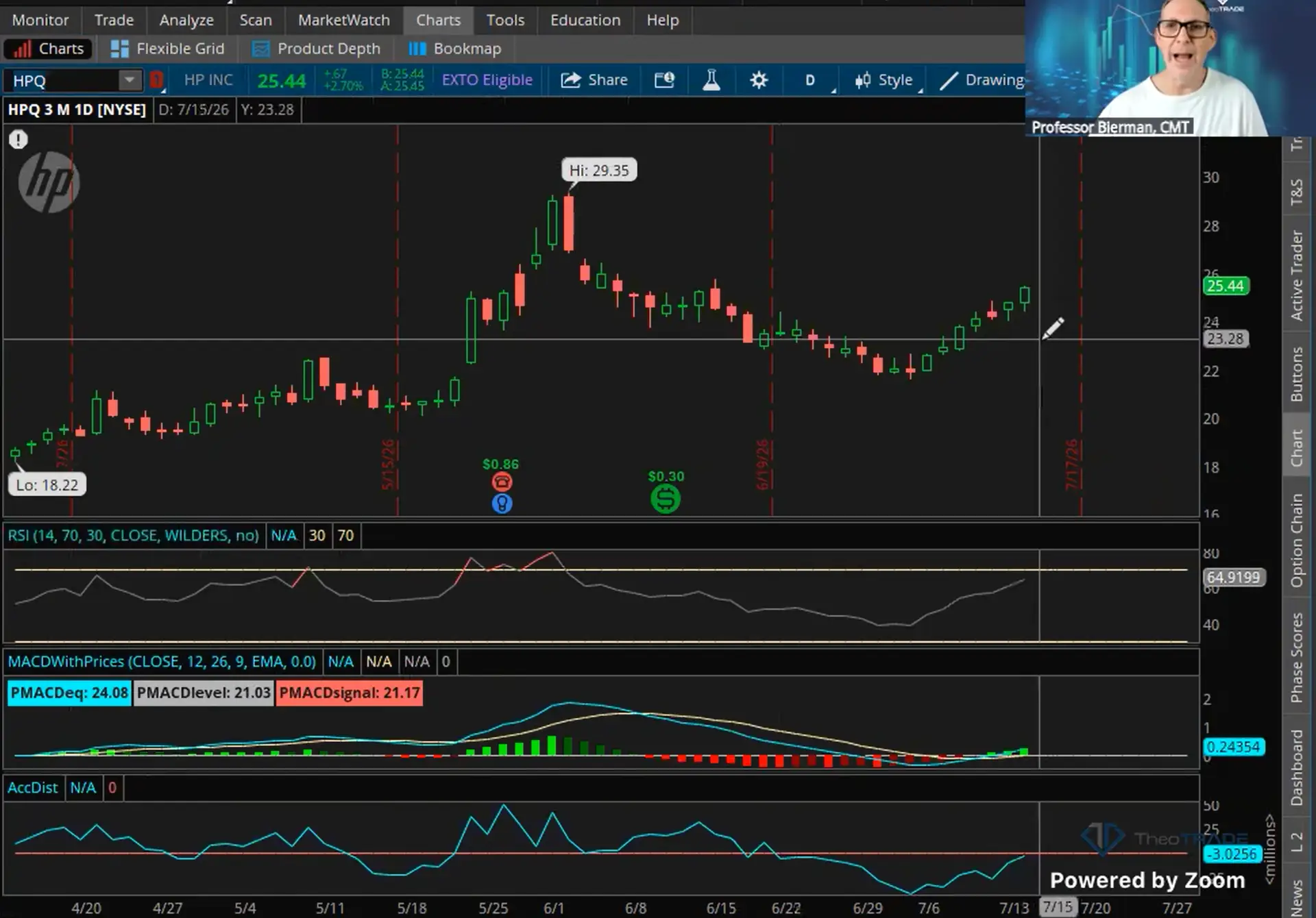
Look at Hewlett Packard. I own it, and it held its ground while IBM fell apart.
The reason is simple. Hewlett Packard already trades at a low multiple (~9.5x earnings), so little was left for the market to take away.
That cushion is the whole point. A stock with a modest multiple has far less room to compress against you.
I protect my own book the same way. I took gains on two of my three tech stocks this morning, and I never panic.
When a position runs up 25%, I trim the gain and lock it in. That habit keeps one delay from wrecking my year.
Here is what I watch before a stock unravels:
- A stretched multiple with no earnings growth to justify the price.
- A guidance update that includes the word delay.
- A share price that holds firm while the valuation quietly erodes.
Each of these shows up before the crash. None of them appear on the chart itself.
Know what you are paying for before you buy. The machine will not wait for you to catch up.
Protect your capital before the next delay hits the tape.
With our proprietary scanner and masterclasses, you’ll be better
Professor Jeffrey Bierman
Creator of the Genesis COG System