Hey Trader,
Earnings night is where I watch good companies get handed over for free.
A guy owns something he likes. The report lands after the close. He doesn’t want the gap. So he sells at four o’clock and promises himself a cheaper price in the morning.
That cheaper price never shows up. I’ve been watching people make that trade for 25 years.
I own Kroger. It trades cheap against its own guidance, and the insiders have been buying millions of shares while nobody else will touch it.
Kroger printed a buck nine. The stock opened down anyway, and the money that never read the release threw it out the door.
I didn’t sell a share. I bought a one dollar put and then I sat on my hands.
That dollar wasn’t a bet against my own stock. It was the price of not having to make a decision at 9:31.
Below I’ll show you what has to be true about a company before it earns that insurance. Then the strike I picked, the expiration that made it cost a dollar, and the signal I waited for.
I call it the sacrificial put. It’s built to be thrown away, and what it bought me that morning was worth a lot more than what it cost.
What A Sacrificial One Dollar Put Actually Does
A sacrificial put isn’t a bearish position. I buy it on stocks I want more of.
It does one job. It caps my exposure through the event so I stop reacting to the open.
An earnings gap does less damage than the trader reacting to it. You dump shares into a red print because you can’t stand the exposure, and then you never get back in.
Pay a dollar and that exposure has a floor under it. Now you can wait and watch into the day like I’ve been telling you for years.
That dollar doesn’t buy protection so much as it buys patience.
What Has To Be True Before You Buy One
Insurance only makes sense when the company underneath it can defend itself. Kroger can.
The stock trades at eight times earnings. Run the guidance through the math and it’s worth $85.
They printed a buck nine, and the guidance came in close to where it should have. Nothing in that release said the business changed.
Insiders have bought millions of shares. Institutions have been loading up for weeks, and they knew something the tape hadn’t shown yet.
The whole selloff traces to one narrative about competing with Walmart. That’s a story about the future, not a change in the numbers.
You have to be out of your mind to sell a stock at eight times earnings. That takes real fear or plain stupidity.
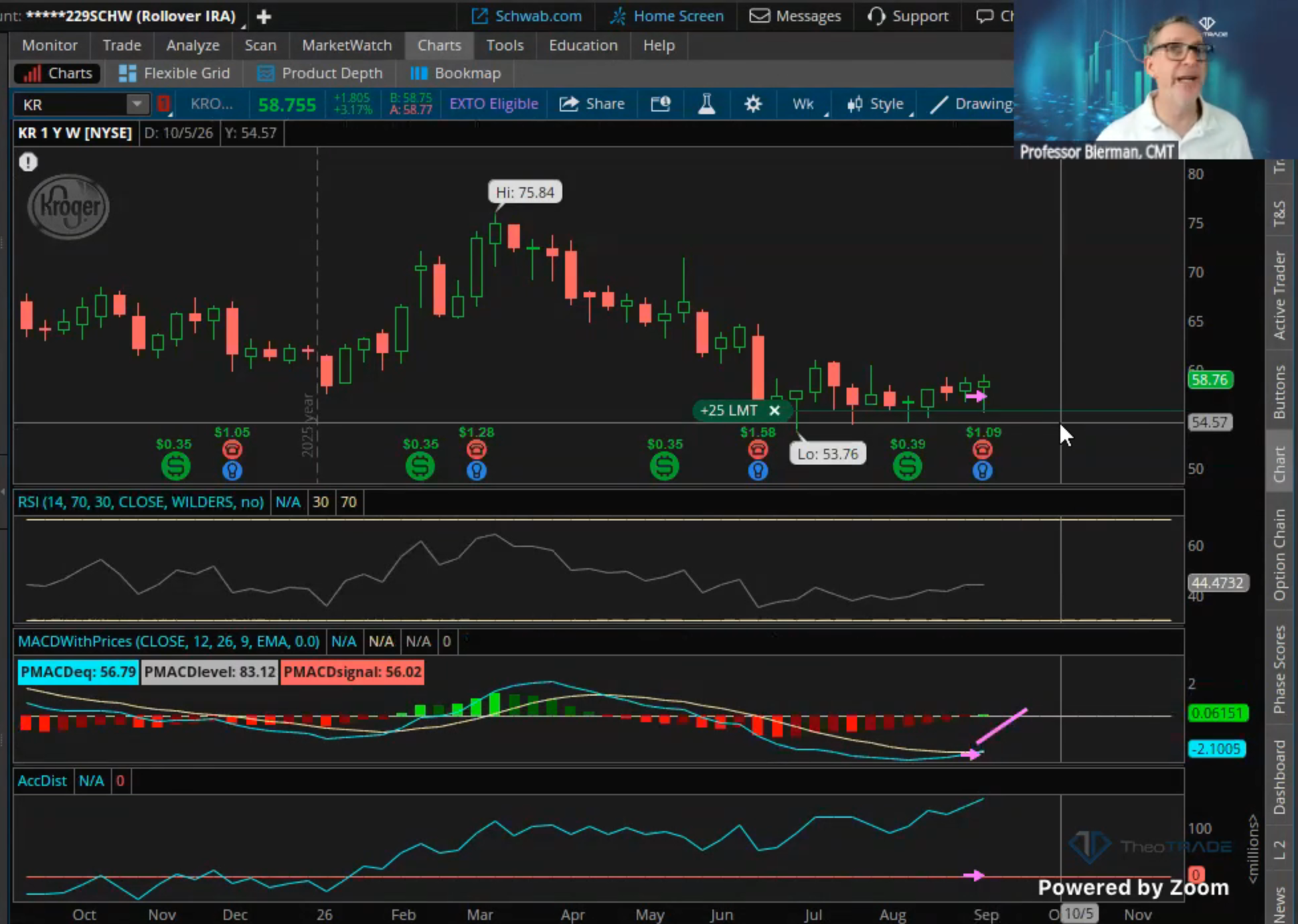
Watch 61 on that weekly. Take the level out and the short sellers don’t get out of this for the rest of the year.
The Strike And The Expiration I Picked
I bought a 55 put with 16 days on it. It cost barely a dollar.
Both halves of that matter. A strike sitting under the stock keeps the premium thin, and 16 days keeps it thinner.
Sixteen days covers the print and the two or three sessions behind it. I don’t need protection in November for something that resolves this week.
That’s also why I’m happy to lose the entire dollar. I’d rather sacrifice the put than sacrifice a position I spent weeks building.
I knew where I stood before I placed it. If Kroger kept tanking, I’d lose on the shares and the put would save me.
The Signal I Was Waiting For
The stock opened lower and shook people out. That’s exactly what I wanted to see.
The frightened money left early. So did the managers who never read the release and were only protecting their quarter-end optics.
Then the bid arrived. I watched institutional buying come in right off the low and I said holy crap, I have to get in there.
That candle engulfed the whole move. A stock that opens down, absorbs the sellers and closes back over the prior session tells you who won the day.
Reversal candles like that one are a daydream for me. I sold the put right there for fractions of pennies and stayed long every share.
How You Run This Tomorrow
Start with the company and work toward the option. Three things tell you a name has earned the insurance:
- The multiple sits low against the guidance the company just handed you
- Insiders or institutions have been accumulating into the weakness
- The selling traces to a narrative rather than a change in the numbers
Then price the put short and cheap. Pick a strike under the stock and an expiration that covers the event plus a few sessions, and the premium takes care of itself.
Now comes the part nobody does well. Sit through the first 30 minutes and keep your hands off the keyboard.
Tony Rago and Corey Rosenbloom have preached that rule for years. The open chases you into the wrong side and then reverses on you.
When the buyers show up and the candle turns, sell the insurance and keep the shares. When they never show up, you own a put and you’re covered while everybody else is guessing.
Nobody gets paid for the decision they make at 9:31. A dollar is what it costs to skip that decision entirely.
Running that check on one position takes a few minutes. Running it across a book of them before every print is a different job.
That’s the work I do all day. I value the company first, I use the technicals for entry and exit, and I map the volatility to decide what the protection should cost.
Charts sit behind the curve. Multiples sit ahead of it, and the multiple is what gets you rich.
That’s why I didn’t sell Kroger while everyone else was hitting the bid. I already knew what it was worth before the report landed.
The Genesis COG System hands you that whole methodology. You get the valuation work, the entry and exit rules, and the volatility mapping that prices a hedge before you risk a dollar on it.
The opportunity in this business shows up every single day. You just have to know how to take it.
👉 Enroll in the Genesis COG System
Professor Jeffrey Bierman
Creator of the Genesis COG System