
Hey trader,
Cheap oil feels like a gift: Lower gas, lower costs, more money in your pocket.
For a trader holding stocks, that gift can be a warning in disguise.
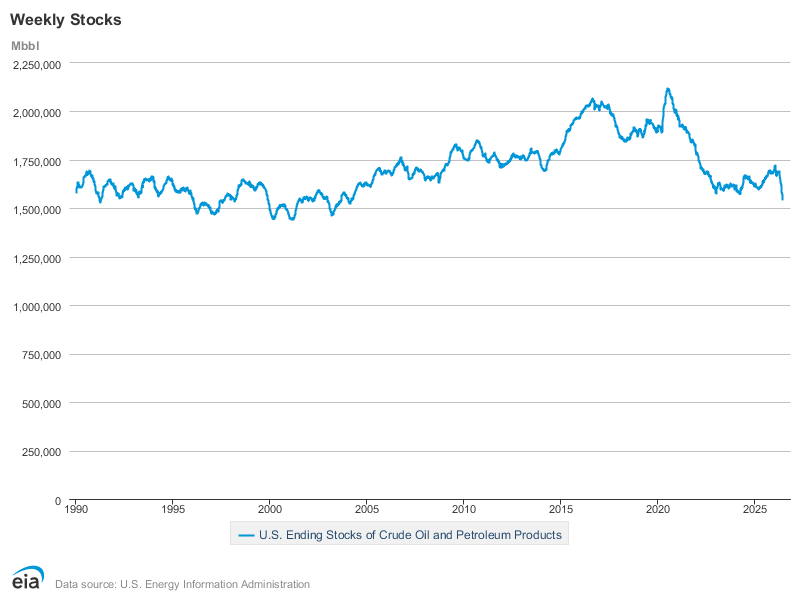
Folks forget we are in the middle of a conflict that hasn’t been resolved. Roughly 1.5 billion barrels are missing from global supply. Global oil inventories have been depleted.
Crude sat at $68 to $70 all morning. A price that low, with a backdrop that tight, should not exist. The supply side alone cannot explain it.
The oil market’s refusal to rally tells us something key: the problem is no longer supply…it’s demand.
Today I want to show you the math I ran on crude this morning, why a stubbornly cheap barrel is a recession flare, and what it means for every position you hold.
The Price That Should Not Exist
Crude has fallen from around $100 a barrel down to the high $60s. My fair price read this morning sat at 69.85.
On the surface, that looks like normal weakness. Underneath, it makes no sense.
We are short an estimated 1.4 to 1.5 billion barrels of supply. The conflict is not resolved. The Strait of Hormuz is still a chokepoint.
Every one of those facts points to higher prices. The tape is doing the opposite.
That contradiction is exactly what I flagged with Don at the open. A barrel this cheap, in a world this tight, is telling us something the headlines are not.
The Supply Side Is Screaming Shortage
Start with what we know for certain. Supply is not just tight. It is historically thin.
Energy department crude inventories drew down another 6.1 million barrels. Cushing is scraping the bottom of the barrel. The SPR has been drained so far we are scraping the sides of the tanks.
OPEC has not stepped up. US producers are pumping, yet they are not ramping fast enough to cover even domestic demand, let alone the global hole.
So the bullish case for oil writes itself. Less supply, a live conflict, no quick way to refill the pipeline.
The counterargument is that Iran eventually floods the market with barrels. That assumes a lot.
It assumes they have 1.5 billion barrels sitting ready. It assumes the boats and the shipping lanes to move them fast. Neither one fills the gap this quarter.
With supply pinned this tight, price has only one honest direction. Up. The fact that it will not go there is the tell.
The Curve Already Gave It Away
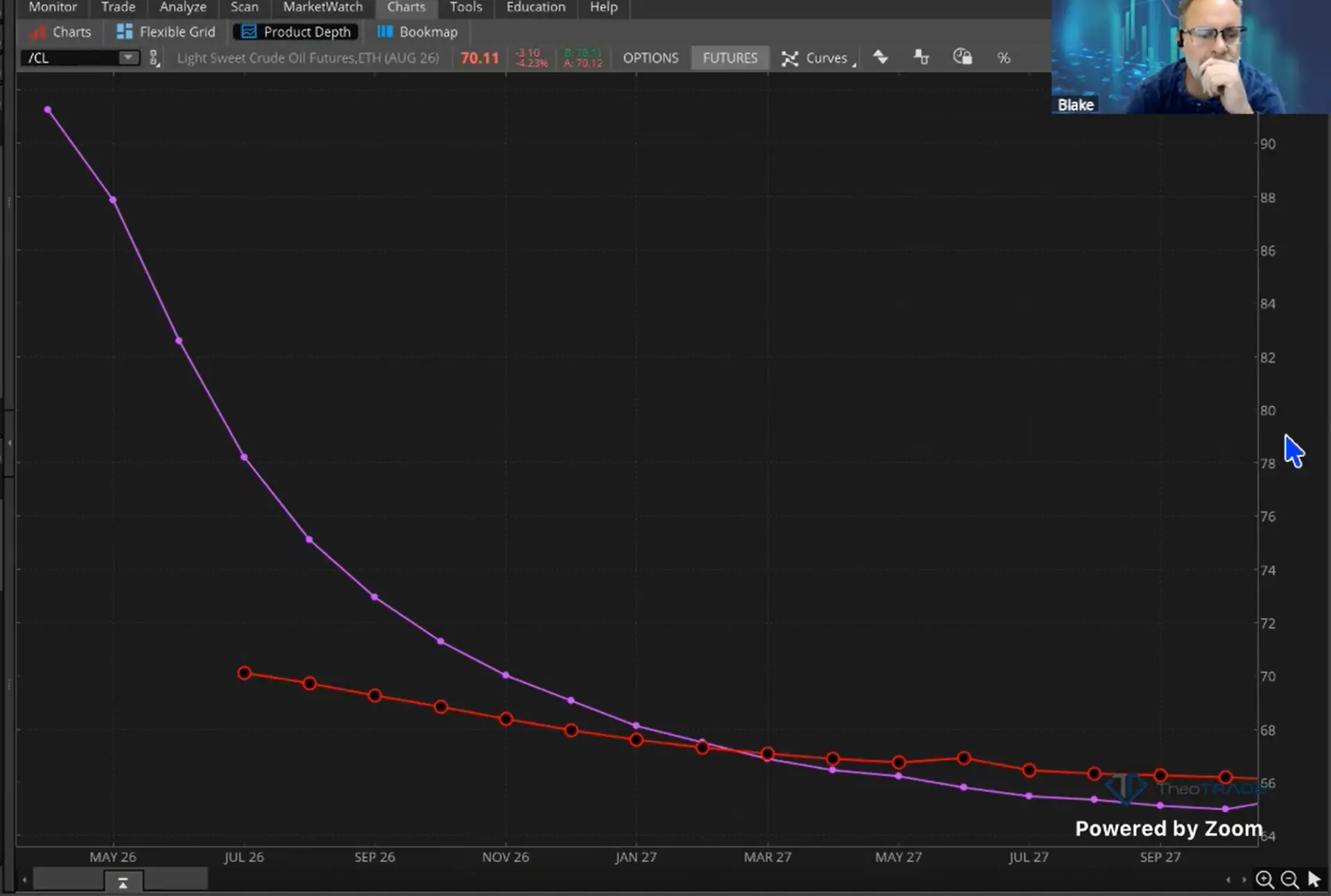
The futures curve quietly confirmed the read. Back on March 6, the term structure was steep, pricing in real fear of a shortage.
That steepness has flattened out. Crude is still in backwardation, where the front months trade above the back months, which is the classic shape of a tight market.
The problem is how shallow that backwardation has become. The spread between the August and the September contract is about 40 cents on a $70 barrel.
That works out to roughly 0.6%. A market truly panicked about running dry does not price the next month at a rounding error.
The shortage premium has bled out of the curve. The fear of running out is fading, even though the barrels are still missing.
What Cheap Oil In A Shortage Really Means
Here is where the Econ 101 comes in. Price is just the point where supply and demand meet.
We pulled an estimated 1.5 billion barrels out of supply. Global demand has historically grown 1% to 2% a year. Slide the supply line down and hold demand steady, and price has to rise.
It did not rise. It collapsed by about $30. There is only one way that math closes.
Demand has to have fallen even harder than supply did. The demand line shifted down so far, and so quietly, that it dragged price back to pre-conflict levels anyway.
That is the part that should stop you cold. A demand drop big enough to absorb a 1.5 billion barrel supply shock is not a soft patch.
The scary question I kept coming back to in the room is whether global demand changed so dramatically that we never saw it happen. Cheap crude during a genuine shortage is the fingerprint of an economy slowing down hard.
What This Means For Your Trades
Oil is not just an oil story. It is the cleanest real-time read on global demand you have.
So run one check across everything you trade. When supply is this constrained and price still will not lift, demand is the weak link, and demand weakness does not stay contained to one barrel.
Here is how I am putting that read to work:
- I treat crude as a demand gauge first and a trade second. A barrel that cannot rally into a shortage is a yellow light on the whole economy, equities included.
- I do not read cheap energy as automatically bullish for stocks. If the cause is collapsing demand, the same weakness eventually shows up in earnings and indices.
- On crude itself, I am long only until our troops withdraw. The surprise risk still sits to the upside, because any crack in the calm gaps oil higher fast.
- In a normal range I am a buyer down at 66 with a target back up at 76. That is the old playbook crude has respected for years, and it is where I get interested again.
The barrel is not the point. The message inside the price is.
When a market ignores a shortage this large, it is telling you the buyers have quietly walked away. That is worth knowing before it shows up in the rest of your screen.
I read crude, the indices, gold, and the euro this way live every morning inside The 10AM Bell. Entry, stop, target, and the reason behind every click or pass. Every session, no exceptions.
Click here to join us and watch the next read called in real time.
Blake Young
Senior Market Strategist, TheoTRADE