
Hey Trader,
You can’t short into a hole. Tony Rago says it best, and I live by it.
Not one TheoTrade instructor got squeezed on Monday.
We don’t short into a hole.
I get why traders keep pressing a short in a selloff. The trend still points down, and that counts for something.
Don’t get me wrong. We’re still in a bear move, inside a downside momentum channel.
Plenty of traders wait for a headline to tell them when to cover. The squeeze usually takes their money first.
My rule is simple. I take the money and run once the market gets this oversold.
That’s only half of it. You also need to know when a short is finished for good.
My Burn Signal and Genesis COG rules settle that one. Never short a breakout.
Friday put both rules to the test. Everybody was panicking, and I bought semiconductors.
Gianni covered his shorts that same day. The market ripped 300 points on Monday, and Nvidia broke the upside of its descending channel.
Let’s start with what happens when you short into a hole. Then I’ll show you the breakout that tells me a short is done.
What Happens When You Short Into A Hole
A short sale profits when a stock falls. You sell first and buy it back later at a lower price.
The trap springs when you short into a hole alongside everyone else. CTAs, the trend-following funds run by algorithms, were heavily short heading into Monday.
A crowded short only needs one reason to reverse. I think somebody behind the scenes wanted a squeeze, and Jensen Huang handed them that reason.
Shorts had to buy back their positions all at once. That rush of buying is a short squeeze, and it feeds on itself.
I’ve said for weeks that they’d never let this market fall in a straight line. I expected a 300-point rally.
I didn’t expect it in a single day.
Anyone who tried to short into a hole on Monday got stuck. There was no clean exit once the squeeze took hold.
Why I Take The Money And Run
You short into a hole when you press a bet on a market that’s already deeply oversold. The easy money on that move is gone.
I don’t wait for a reason to cover. The bounce always comes, and I don’t need to know why.
Friday felt like the end of the world. Sellers were panicking and dumping everything at any price.
I went the other way and bought semiconductors. Gianni covered his shorts the same day.
Monday paid us both. I got a little long in semis and did well.
I’m still not celebrating. The market could drop it right back down tomorrow.
I’ve watched traders buy every cheerleading headline and sell every drop. That habit will bankrupt your account.
The same rule works on the long side. Monday handed longs a gift, and I told them to take it.
Never short into a hole. Take the money and run, and let the reason show up later.
Never Short A Breakout
Refusing to short into a hole protects your gains. Knowing when a short is dead keeps you from walking back into the trap.
My Burn Signal never shorts a breakout. Neither does Genesis COG, because doing it is the death of your account.
Nvidia shows why. The stock pulled back right to its 78.6% Fibonacci retracement, a level that measures how much of a prior run a stock gives back.
I think that could mark Nvidia’s bottom for a few years. Then the stock broke the upside of its descending channel.
A descending channel is a pair of parallel lines sloping lower that hold price between them. Nvidia pushed through the top line.
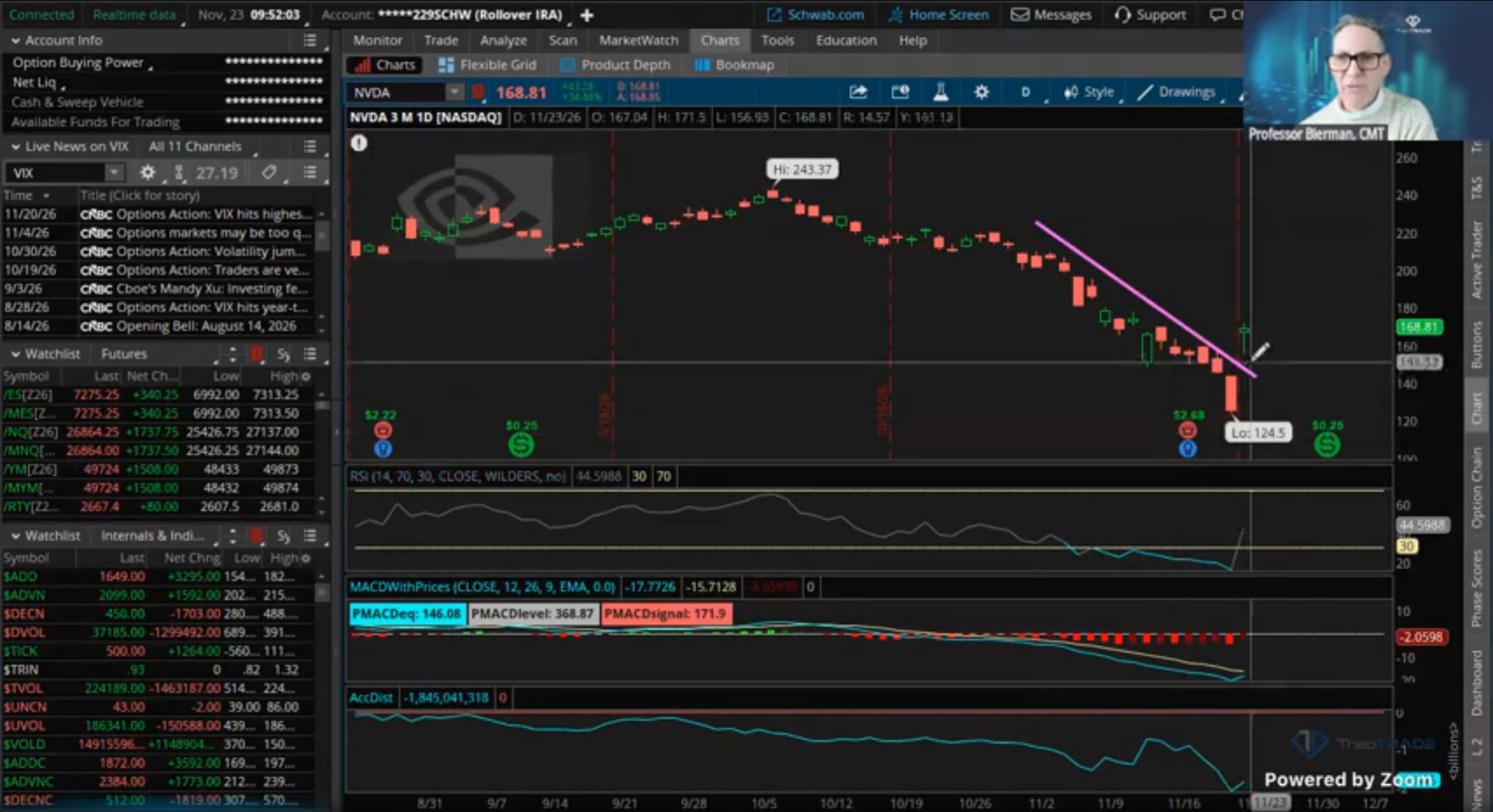
If you worked for me and shorted that breakout, I’d fire you.
That breakout doesn’t make Nvidia a buy for me. Too much of the story rests on one man, and that concentration risk keeps me out.
One day doesn’t make a trend. It can still mark a bottom.
You can take a gain on the pop. You just can’t fight it from the short side.
A breakout tells you the short is over. Respect it, even when you don’t love the stock.
3 Checks So You Never Short Into A Hole
Run these three checks before you press a short in a selloff:
- Measure the stretch. Don’t short into a hole. Take the money instead of adding to the bet.
- Watch the channel. A break through the top of a falling channel ends the short.
- Check the money flow. A bounce without money behind it can fade, so don’t flip long blindly.
Money flow is the one indicator that never lies. I saw zero money going into Monday’s rally.
That’s why I think we could retest 6,800. We’re still in a bear move.
I don’t predict. I just manage risk.
Professor Jeffrey Bierman
Creator of the Genesis COG System