
Hey trader,
Bitcoin has been a total snoozefest for months…until this morning.
Seemingly out of nowhere, the cryptocurrency shot up +6%.
Before the move this morning, someone dropped some serious coin buying almost 30,000 out-of-the-money calls on IBIT, the Bitcoin ETF.
Normally, this is where I’d tell you that the calls forced the stock to move. But that’s not what happened.
IBIT is an ETF that tracks Bitcoin. Those options are a drop in the bucket compared to the dollar volume that runs through cryptocurrencies.
No, this was someone who made a well placed bet ahead of time.
As I looked at the print earlier today, I realized I knew why they made this trade.
It all came down to context.
You see, the environment was perfect for this kind of move.
All the conditions, from gold to the Treasuires favored a bid in Bitcoin.
It may not seem obvious at first glance.
But let me walk you through the logic so you can understand how all the puzzle pieces fit together.
The Treasury Bought Its Own Debt Today
Start with the piece almost nobody noticed: The US Treasury went into the bond market today and bought Treasuries.
This was not the Fed. The Fed prints money. The Treasury does not.
They used cash they had already borrowed over the past year.
With every debt issuance, they borrowed a little extra and set it aside in a reserve for exactly this moment.
That distinction matters more than it sounds.
No new money was created today.
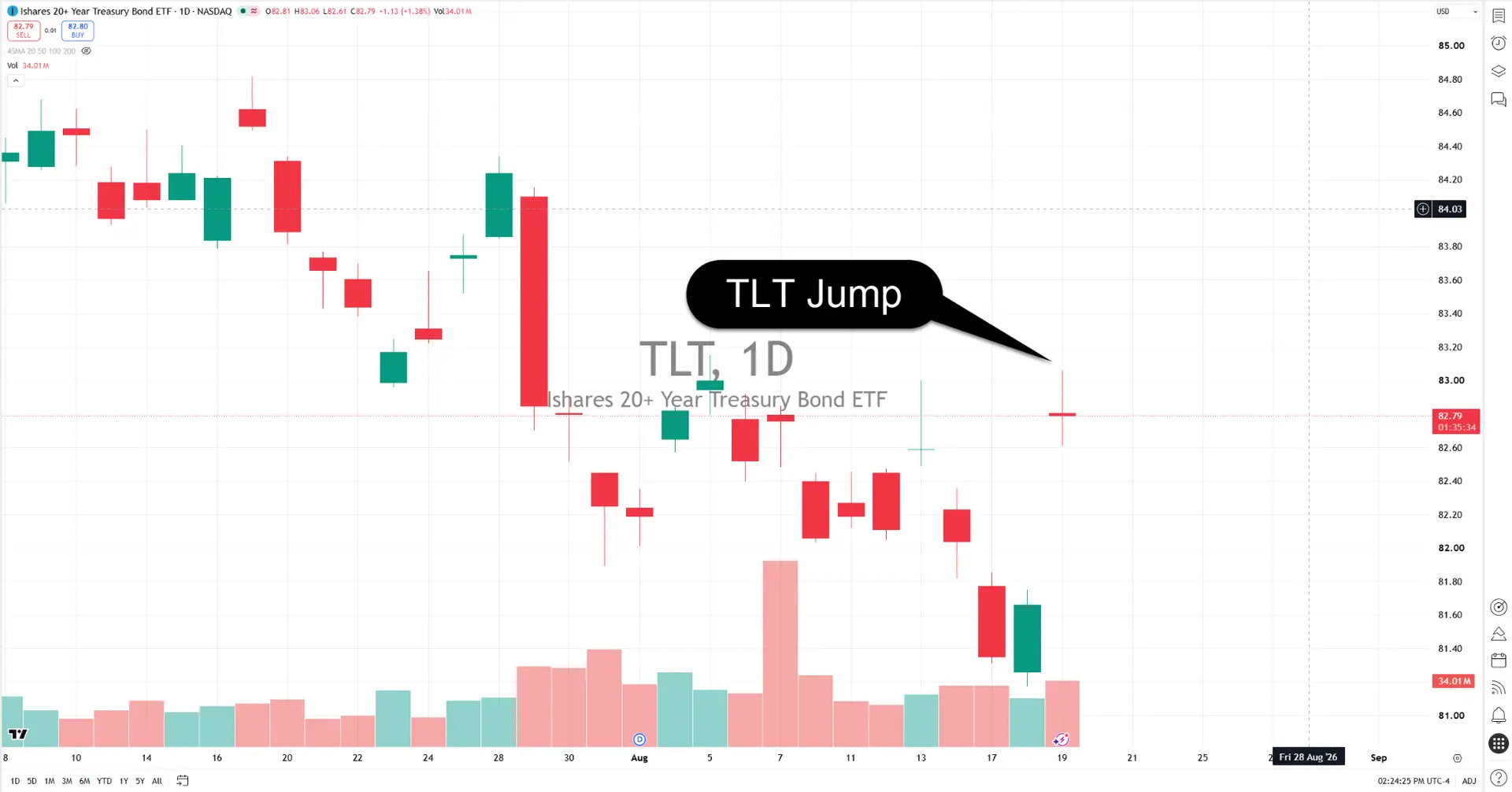
Money that had been sitting frozen at the Treasury got released into the real economy.
The stock of dollars stayed the same. The supply in circulation went up.
More dollars sloshing around means each one buys a little less.
Japan Is The Reason It Happened Today
Now for the piece that explains the timing.
Japan has a currency problem, and it is getting worse.
The yen has been sliding toward 160 per dollar. That 160 level is the line the Bank of Japan defends.
Today it firmed back to 158.
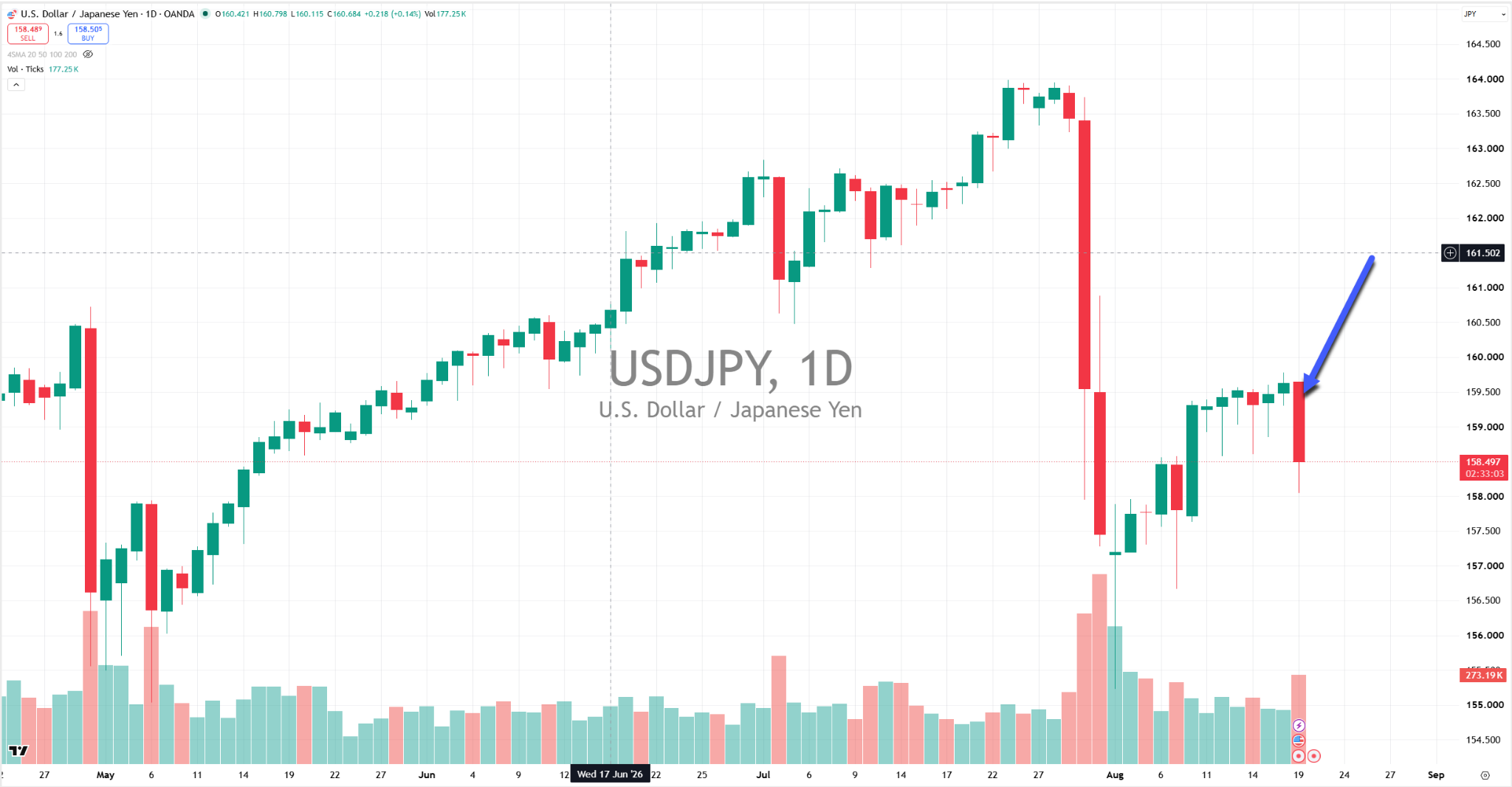
The US Treasury sold dollars and bought yen on Japan’s behalf to make that happen.
Here is where it loops back around. Japan almost certainly sold US Treasuries to raise the cash for that defense.
Our Treasury stepped in and absorbed those bonds with the reserve. One hand fed the other.
The same sequence played out three weeks ago. Treasuries sold off hard on July 29th, then the intervention arrived on July 30th.
Why That Environment Favored Bitcoin
Put those two pieces together, and the dollar takes the hit.
That showed up everywhere today.
Gold ran 3.5%.
Silver led right alongside it.
The S&P 500 was up about half a percent, which sounds fine on the surface.
Yet, measured against gold, the index actually lost 3 percent of its value today.
Gold outperforms under exactly one condition – stagflation, meaning weak growth paired with a rising money supply.
Today delivered both.
Anything that sits outside the dollar system gets bid in that setup, and Bitcoin lives in that bucket.
The block trade list confirmed it. Ether saw 11,000 contracts bought at the ask, Newmont picked up 5,100 calls, and SLV took 5,000 calls at the 63 strike for December.
Metals and anti-dollar assets dominated the tape. The IBIT print was one line in that story.
There is one more layer worth understanding. Spending the reserve now means borrowing more later to rebuild it, which makes this policy inflationary over time.
If Japan keeps struggling, the frequency of these interventions picks up. That pressure builds on the dollar with every round.
How I’d Structure It From Here
The volatility skew on IBIT is very positive right now. Demand is concentrated in the upside calls, which makes call spreads cheap to own.
A dollar wide vertical roughly 30 days out is quoting 58 cents. That structure pairs a long call with a short call a dollar higher, capping the payout at a dollar.
- Setup: a dollar wide call vertical on IBIT, about 30 days out
- Trigger: I want a little pullback before I dip a foot in
- Target: $41 in 30 days, where the spread closes at a dollar
- Cost: 58 cents
- Edge: the favorable skew keeps the spread cheap while call buyers keep stepping in
I also have a bear spread on IBIT about to expire. Today’s intervention altered that path, leaving us sitting right on the level.
That is the lesson in all of this. A large print marks where the money went.
The environment tells me whether that money was early.
That IBIT print never showed up on a price chart first.
It showed up on the Block Hunter Console, the tool I use to catch a block the moment it crosses and read whether it is a fresh buy, a roll, or size quietly sliding closer to the money.
The print alone was never going to be enough.
The Treasury, the yen, and gold gave me the second confirmation, and that is the work I walk through with members every session.
Now is your chance to join me in Block Hunter before the next big print hits.
You get our proprietary unusual options scanner, my alerts, and the training that teaches you to read the environment behind the flow.
Brandon Chapman, CMT
Creator of Ghost Prints