
Hey trader,
Tuesday morning the NQ did something it has never done in its history. It tagged 30,000.
The room watched a number print on the chart that did not exist a year ago. The tape around it was narrow, fast, and run by a handful of chip stocks.
In the middle of all that, I took a long 26. It hit an emergency stop for a loss of 30 handles.
A few minutes later the exact same setup showed up a hundred handles lower. I took it again without hesitation.
That one paid the full 31 to both targets and erased the loss.
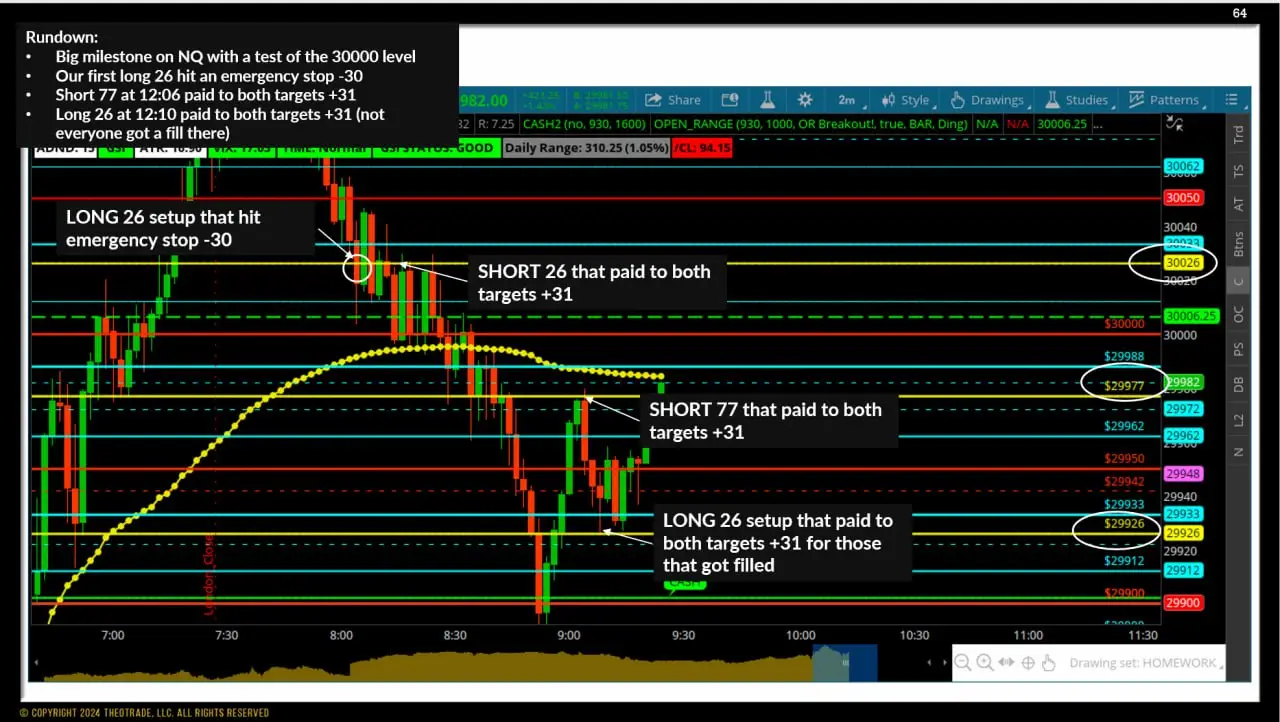
I want to walk you through both trades. The difference between them was not the market.
The difference was me staying willing to take the second one.
The First 26 Did Not Owe Me Anything
The first long 26 set up as a first test from above.
Price came down into the level. I got long looking for the 33.
It did not give it to me. Price pushed against the position and ran me out.
I took the full stop.
“Full stop out on a long 26. And that’s just this market, you guys.”
Here is the part that traps people. The moment I got stopped, price turned and went straight to the 33 I had been waiting for.
“It’s going to go to 33 now. Watch. Going to go right to 33.”
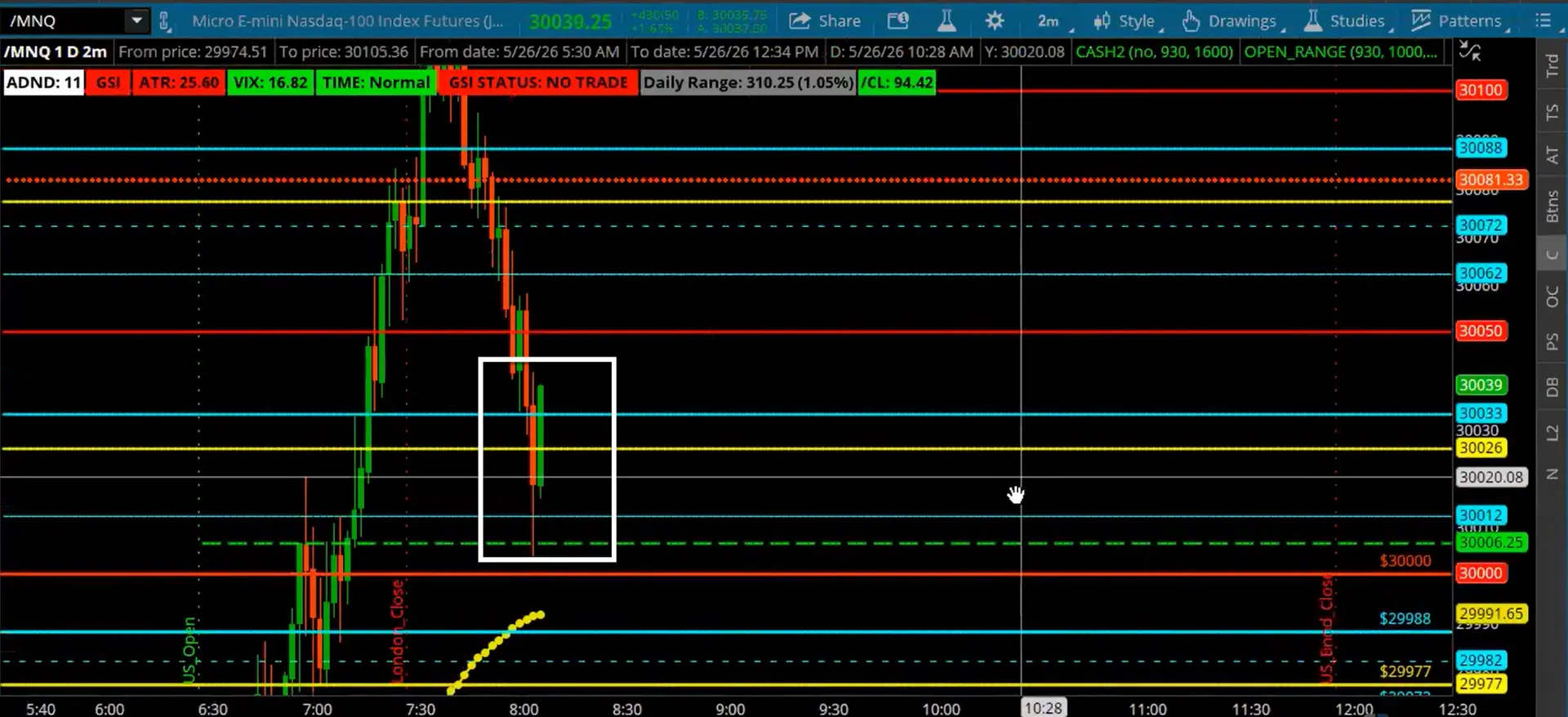
Price went right to the 33. That is the kind of move that makes a trader want to throw the keyboard.
I did not throw anything. The reason is the math.
That long had come into the 26 after a run from 26 down to 12.
It was a first test from above into a level that had already paid its backtest.
The setup was real. The location simply did not owe me a clean ride that time.
“This came 26 to 12, so it wasn’t like that was owed.”
I logged it as a loss and moved on. One bad result does not change what the next identical setup is worth.
The Reset Nobody Notices
A little while later, price worked its way back down toward a lower 26.
Before I touched it, I checked the one thing most traders skip. I looked at the test count.
A bar had already blown all the way through the level on the way down. That single move reset everything.
The level had not been worked over by repeated tests. The next touch was clean.
“So this is a reset. So this is a first test of 26 from below.”
That distinction is the whole trade.
A fourth or fifth test of a tired level is a trade I want no part of.
A first test of a fresh level after a reset is exactly what the methodology is built to take.
The bar that crashed through did me a favor. It handed me a clean first test from below.
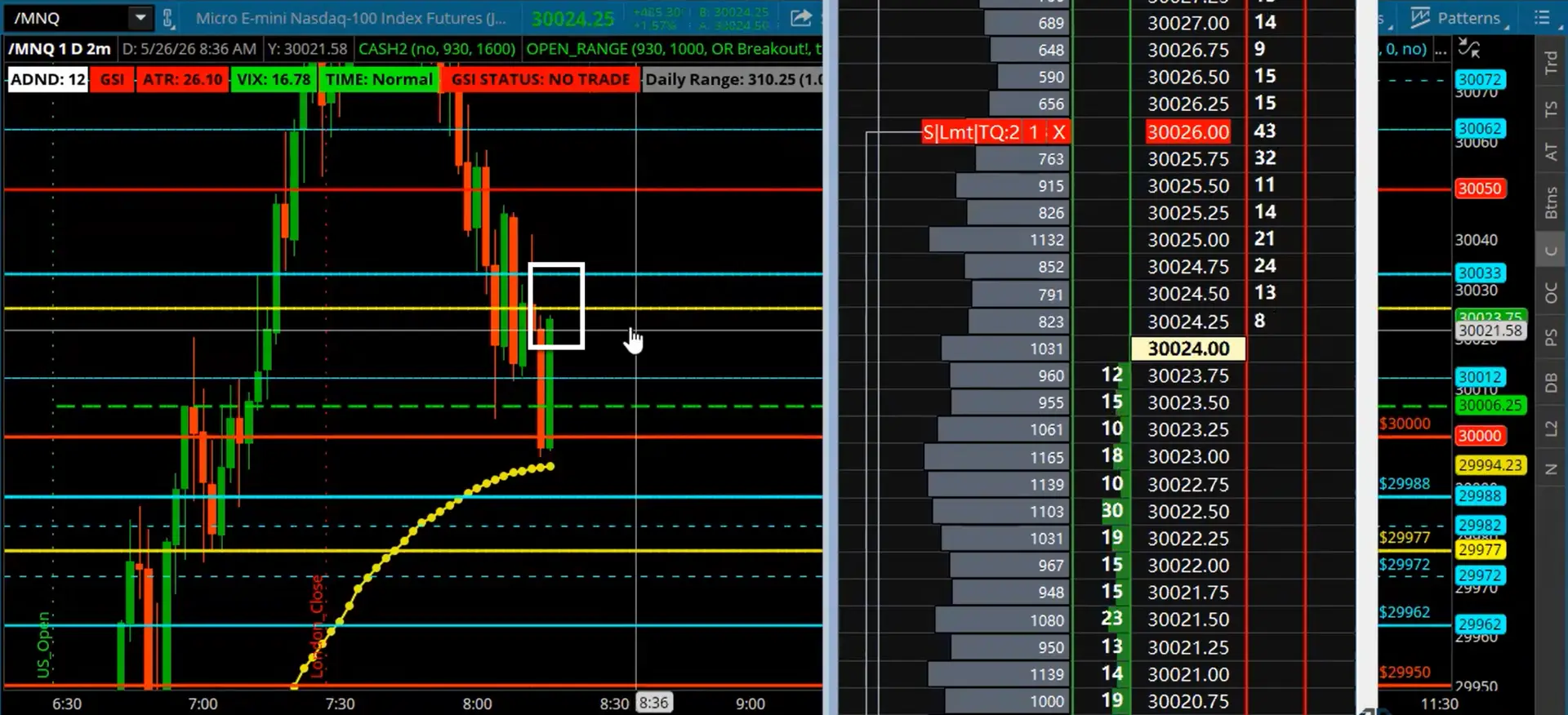
I put my order in at the 26 and let price come to me.
How the Trade Actually Paid
I got filled at 26.50. Then I did what I always do.
I let the bracket work. I talked to the tape instead of forcing it.
“Pay us, please. Be nice to us.”
The front contract came first. I booked the plus seven with no drama.
“We got a plus seven.”
The runner stayed in.
The 26 had room above it back toward the 30,000 round number. The probability on a clean first test from below is that it climbs.
Price worked higher. I watched it tick through a full 24 on the runner and kept holding for the target.
The runner reached the target.
“Boom, full 31.”
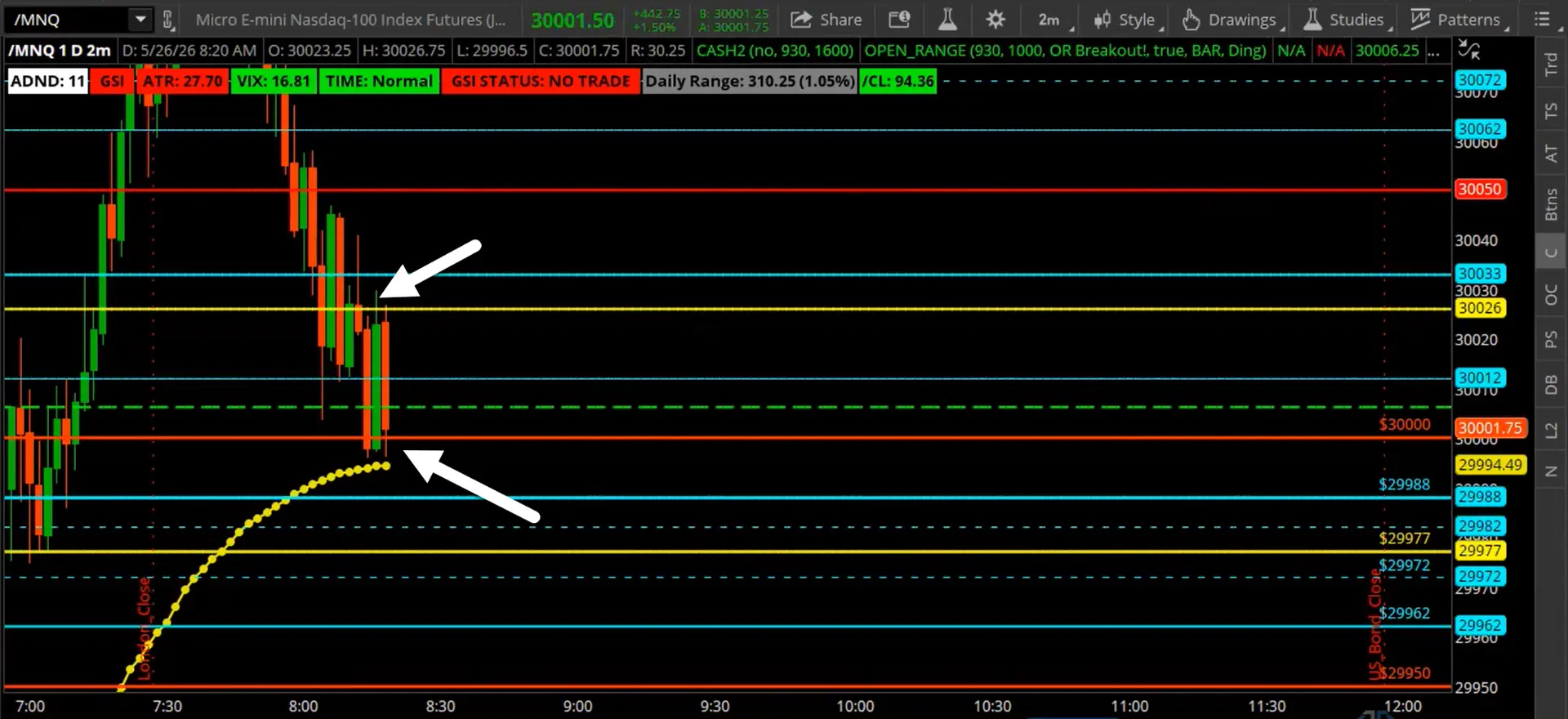
Plus seven on the front contract. The full 31 on the runner.
Both targets paid on a setup that looked identical to the one that had just stopped me for 30 handles.
“We get taken out on one, and this repaired that.”
That sentence is the entire lesson.
The win paid the target. It also repaired the loss that came right before it.
It did that because I treated the two trades as completely separate events.
Why This Is the Skill That Matters
Most traders carry the last result into the next click.
They get stopped. The sting tells them the setup is broken.
They skip the next one. The next one is usually the one that pays.
The probability does not live in your P&L. It does not live in how the last trade felt.
It lives in the setup.
A first test of the 26 from below has the same expectation every time. It does not care whether the trade before it won or lost.
Your job is to take every valid instance. You let the math play out across the reps.
On Tuesday that meant taking a long 26 that looked exactly like the one that had just cost me 30 handles.
The first was a first test from above into a level that had already done its work.
The second was a first test from below off a clean reset.
To my emotions they felt like the same trade. To the methodology they were two different setups.
Only one of them was owed a clean run.
When you run your homework this weekend, do not just count winners and losers.
Watch what happens to the test count when a bar blows through a level.
Watch how a fresh first test behaves next to a fourth test of the same line.
Watch how often the setup that pays shows up right after the one that stopped you.
Once you see it enough times, the stop stops feeling like a verdict. It becomes one data point in a long string of them.
Coming Into Monday
The NQ is sitting at a price it has never seen. The tape is narrow and the moves are fast.
None of that changes the only thing you control. That is whether you take the next valid setup with a clear head.
I got stopped on the first 26. I took the second one anyway.
That is the whole game.
The market handed me a loss and a win on the same setup inside one morning. The only reason I caught the win is that I refused to let the loss make the decision for me.
Show up Monday and take them as they come. Count your tests.
Respect the reset. Take the next one.
Trade smart,
Tony Rago
Creator of the Golden Setup