While Bitcoin dominates today’s headlines, seasoned investors know the financial markets extend far beyond cryptocurrencies.
Don’t misunderstand – I remain bullish on crypto and have been for months. However, focusing solely on crypto means missing other significant market opportunities unfolding right now.
The foreign exchange market dwarfs all others in trading volume, and a major development is occurring that demands our attention: The Euro, the world’s second most-traded currency after the U.S. Dollar, is making unprecedented moves.
Let’s examine what this means…
Why Capital Is Fleeing The European Continent
The geopolitical landscape shifted significantly last week. The escalating situation in Ukraine, marked by increased missile activity, sparked concerns about potential nuclear escalation.
However, as I’ve noted before – if we faced a nuclear conflict, market positions would become irrelevant.
This paradoxically leads some to argue that the “end of the world” scenario actually supports a bullish market stance.
Looking beyond immediate geopolitical tensions, the Euro’s decline represents a longer-term trend. Let’s examine this chart:
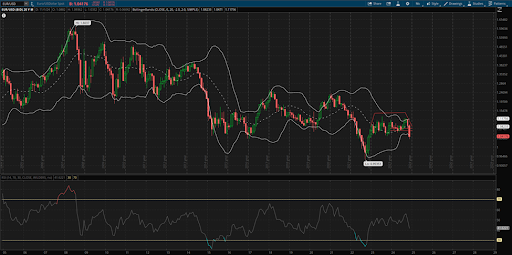
The Euro reached its peak in July 2008. As someone who frequently travels to Europe, I’ve witnessed firsthand how Dollar-to-Euro conversions have become increasingly favorable since then.
While geopolitical conflicts typically trigger capital flight, the Euro’s decline reflects a deeper economic reality.
There’s an industry adage: “The United States innovates, China replicates, and Europe regulates.” Europe’s economic growth has stagnated under regulatory burdens and cultural resistance to innovation – observations confirmed through my regular interactions with European colleagues and business leaders.
The United States, in contrast, leads global innovation in artificial intelligence, semiconductor technology, and digital assets.
This technological dominance attracts worldwide investment. For U.S. market participants, this creates significant opportunities.
So while the Ukraine conflict impacts markets, the Euro’s weakness stems from fundamental economic factors.
The currency’s 8-cent decline over two months has gone largely unnoticed by mainstream media. Looking ahead, I expect the Euro could trade below parity with the dollar by 2025.
I’ll continue monitoring these developments,
Gianni Di Poce
THEOTrade