
Hey trader,
Everyone is watching AVIS (CAR).
The stock went from $100 to now over $800 in a matter of weeks.
Yesterday, I explained broadly how this was possible. Today, I want to dive in deeper into one of the core concepts: options delta.
You see, the Block Hunter Console picked up 10,000-contract print at the $110 strike back on Jan 8th.
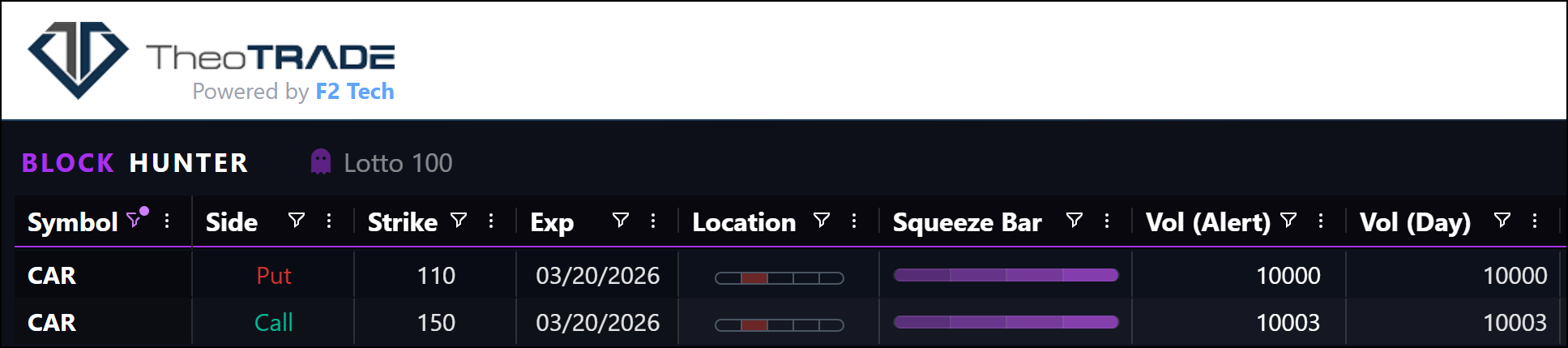
Notice the expiration for March 20th.
Guess when this rally started? March 23rd, the following Monday.
That’s not a coincidence. That’s one million shares of Avis a trader was forced to buy.
Yet, when the trader sold that put, Avis was trading over $120.
At the time, the block print seemed innocent enough.
However, I’m going to explain how this one print kicked off an insane rally.
Delta Is Not Static
A put at a 20 delta on January 8th does not stay at a 20 delta. It moves with the stock, and the path it follows is predictable.
When Avis was trading at $120 and the strike sat at $110, the delta on those puts was small. The put seller’s exposure looked minimal. The dealer on the other side carried a modest hedge.
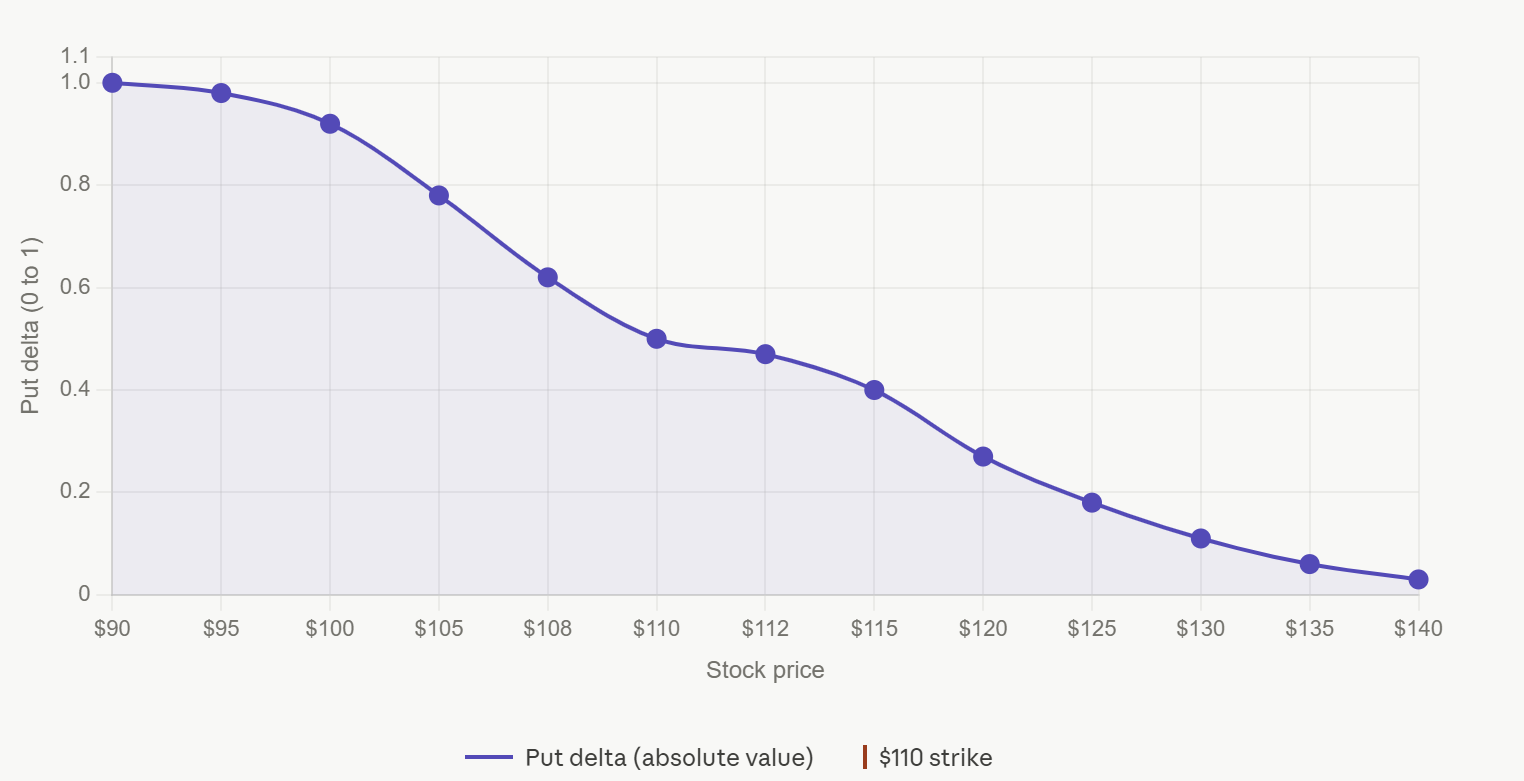
As the stock drifted lower through February and into March, the delta expanded. Every dollar of decline pulled the contract closer to the money and pushed the delta higher.
At March 20th expiration, Avis finished below $110. The delta locked at 1, and the assignment process kicked in mechanically.
The put seller was obligated to buy one million shares at $110. That is contract count times 100 shares per contract times a terminal delta of 1.
You can see in the chart above how the delta changes along with price before expiration.
Why That Matters for Everyone Else
The million shares did not just sit on the buyer’s books. They came out of circulation.
Avis had a low float to begin with, high short interest against it, and concentrated institutional ownership holding shares off the market. The January 8th print removed another million shares from an already constrained supply.
The mechanical buying landed on a Friday expiration. The first trading day after that was Monday, March 23rd. The stock opened and started running.
That rally has now carried Avis from roughly $100 to over $800. The January 8th print did not cause the entire move on its own. It set the conditions by removing supply at the exact moment short interest had nowhere left to hide.
What This Means When You Read a Print
The delta on the day of the print is not the number that matters. The delta at expiration is.
A print at a strike that looks unreachable today is never actually unreachable from a hedging or assignment perspective. Stocks move, and when they move toward the strike, the math starts to resolve itself.
Three questions turn any flagged print into a readable one:
Where is the strike relative to current price, and how much time does the contract have. The Avis strike was $10 below the stock with 71 days of life. That is well within a normal range of price movement.
What is the delta now and what would it be at the strike. A 20 delta today becomes roughly a 50 at the strike and a 100 if the contract finishes in the money.
What is the contract count multiplied by 100 multiplied by terminal delta. That is the share flow the position produces when it resolves.
On January 8th, those three questions pointed to one million shares of potential flow on March 20th. That math was sitting on the Console the entire time.
What This Changes About How You Trade
The framework shifts how you hold positions already on the book and how you evaluate new ones.
If you own a call spread and the stock is approaching your short strike, dealer hedging pressure builds rather than releases. The move into your target can accelerate, and closing early may capture more than waiting for expiration.
If you are short puts or running a credit structure against a stock with constrained supply, the same transformation works against you. Delta expanding at the strike means your assignment risk grows on the exact stock where you have the least ability to source shares cheaply.
When you evaluate a new print on the Console, the question is not whether the block is meaningful today. The question is what has to be true for it to become meaningful, and how far away the stock is from that condition.
The Avis print answered that question quietly for 71 days. Then it answered it all at once.
How to Apply This Going Forward
Scan prints by contract count and strike distance, not current delta alone. A 10,000-contract block at a strike 10% away from the stock is a bigger potential signal than a 2,000-contract block sitting at the money.
Identify which flagged prints have strikes within the stock’s normal range of movement over the contract’s lifetime. Those are the ones most likely to resolve into real share flow.
Track the stocks that are drifting toward previously flagged strikes. That is where the delta transformation begins and where the hedging or assignment math starts to compound with whatever else is happening in the name.
Stack squeeze conditions on top. Low float, high short interest, and concentrated ownership turn delta transformation into a move like Avis instead of a quiet settlement.
What the Console Is Tracking Now
The Block Hunter Console caught the Avis print in January. It catches dozens of similar setups in motion at any given time.
The prints that look small today are the ones that can resolve into the largest moves later. Reading them through the delta transformation lens is what turns a flagged opportunity into an actionable one.
See exactly how Block Hunter catches institutional positioning before the crowd catches on.
Brandon Chapman, CMT
Creator of Ghost Prints